

Introduction
Australia is embracing a clean energy future, and Battery Energy Storage Systems (BESS) are playing a pivotal role. As the country shifts away from fossil fuels and aims for higher renewable energy integration, large-scale solar battery storage projects have emerged as a key part of the solution.
Notably, Australia’s solar battery sector is accelerating with huge investments in cutting-edge technologies that will reshape how the national grid operates. From mega-battery installations in New South Wales and Victoria to cutting-edge innovations in Western Australia, this article will explore how solar batteries are not just transforming homes and businesses but the grid itself.
Let’s dive into how BESS is revolutionizing Australia’s energy landscape.
What Is BESS (Battery Energy Storage System)?
A Battery Energy Storage System (BESS) is a solution for storing excess renewable energy, such as solar power, for later use. By harnessing the power of solar batteries, these systems store energy generated by solar panels during the day and release it when energy demand peaks, or when the sun isn’t shining.
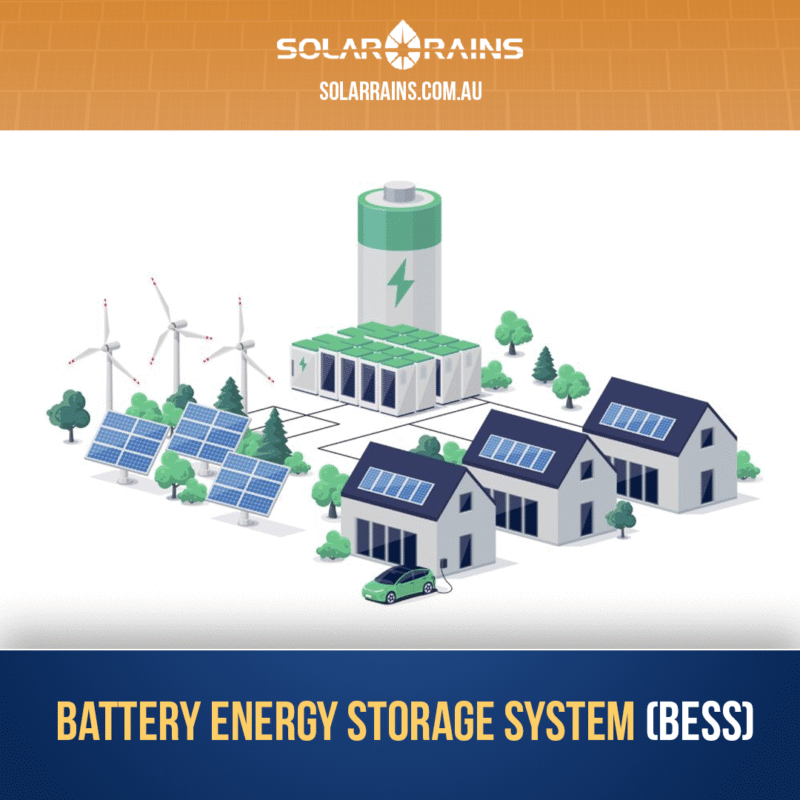
BESS systems support the growing need for reliable renewable energy. By balancing energy supply and demand, BESS helps smooth out the intermittent nature of renewable sources like solar and wind.
Unlike traditional fossil fuel-based power generation, which relies on a constant fuel supply, BESS allows energy to be stored for on-demand use. In Australia, where large areas are affected by frequent power outages and grid instability, BESS represents an essential step in ensuring a resilient, renewable, and cost-effective energy future.
Key Large-Scale Battery Projects in Australia
Several high-profile projects highlight how solar battery storage is reshaping Australia’s energy future. Below are some of the largest and most significant BESS initiatives that are contributing to the clean energy transition:
Waratah Super Battery (850 MW – Akaysha, NSW)
The Waratah Super Battery is one of the largest BESS projects in the world, located in New South Wales. The project has a capacity of 850 MW, which will provide stability to the state’s energy grid and integrate more solar power into the network.
Collie BESS (Synergy, WA)
The Collie BESS project in Western Australia will enhance energy security by supporting the state’s transition from coal-fired power to cleaner sources. The battery system will provide much-needed stability to the grid as renewables increase.
Wooreen BESS (EnergyAustralia, VIC)
EnergyAustralia’s Wooreen BESS project in Victoria is another major step forward, providing critical energy storage capacity and ensuring the integration of more solar and wind power into the state’s energy mix.
Calala BESS (Equis, NSW)
The Calala BESS project in New South Wales represents an important milestone in solar battery development. This project will provide backup power to essential infrastructure and communities while improving grid stability.
AGL’s Liddell Power Station Conversion
AGL Energy has partnered with Akaysha to convert its Liddell Power Station in the Hunter Valley into a battery storage facility. The conversion will help stabilise the grid, support renewable energy, and help AGL meet its net-zero emissions targets.
These projects show that large-scale solar batteries can provide enormous benefits for both residential and industrial energy needs.
From Home Batteries to the Waratah Super Battery
While residential storage is booming, Australia is also seeing the rise of massive Utility-scale BESS projects. The Waratah Super Battery in NSW and the Victorian Big Battery near Geelong are designed to keep the grid stable during peak demand. This large-scale storage acts as a giant safety net, allowing more rooftop solar to be exported without crashing local substations. For homeowners, this means a more resilient power supply and a more stable energy market, as these ‘big batteries’ provide the frequency control and grid-forming capabilities historically provided by coal plants.
Why the Need for Large-Scale Batteries?
Australia is facing a growing demand for clean, renewable energy, and solar panels alone aren’t enough to meet that demand. The intermittent nature of solar power, it’s only generated when the sun is shining, means that solar energy needs to be stored for times when demand exceeds supply or when the sun isn’t available.
BESS solves this problem by storing excess energy during the day for use at night or during peak hours. Solar energy storage also plays a key role in managing peak demand, reducing the stress on the grid, and lowering the need for traditional fossil-fuel-based power generation.
Benefits of Large-Scale BESS:
- Grid Stabilisation – Provides backup power when needed.
- Renewable Energy Integration – Supports the integration of more solar and wind power into the grid.
- Cost-Effectiveness – Reduces the need for fossil fuel power during peak times.
- Energy Security – Enhances energy independence and reduces reliance on foreign energy imports.
- Lower Emissions – Supports Australia’s transition to a low-carbon energy future.
The Industry Response: Who’s Driving the Change?
The rise of BESS is supported by a growing number of developers, operators, and energy companies, all working towards shaping the future of energy in Australia. Notable players in the market include:
- Akaysha – A leader in large-scale battery storage.
- AGL Energy – A well-established energy provider working on transitioning to cleaner energy.
- Synergy – A renewable energy company committed to reducing WA’s reliance on coal.
- EnergyAustralia – Expanding its storage capabilities with BESS for grid stability.
- Equis – Pushing forward with ambitious solar battery projects.
In addition to these industry leaders, Australian government policies such as the Clean Energy Finance Corporation (CEFC) and ARENA are investing heavily in the development of renewable energy storage technologies, creating a supportive environment for solar batteries.
Challenges & Opportunities for the Australian Energy Sector
While BESS represents a huge opportunity, there are challenges ahead. These include:
- Technological Barriers: Despite impressive advancements, energy storage technology still has limitations regarding cost, scalability, and efficiency.
- Regulatory Issues: Coordinating large-scale battery projects with existing energy infrastructure and regulations presents a complex challenge. Governments and utilities need to work together to ensure compatibility with the grid.
- Investment & Funding:: While funding has been flowing, financing large-scale projects like BESS can still be difficult due to the significant upfront capital required.
However, the growing importance of energy storage presents tremendous opportunities:
- Lower energy costs for businesses and homeowners
- Increased energy resilience and grid stability
- Job creation in renewable energy sectors
- Increased investment in clean tech innovation
Solar Batteries for Business: The Growing Demand
Beyond homes, large-scale solar battery storage is proving a game-changer for businesses in Australia. By investing in BESS, companies can:
- Reduce energy costs by storing excess solar energy
- Benefit from lower operating costs and higher energy efficiency
- Gain energy independence during outages
- Support their corporate sustainability targets
More and more Australian businesses, especially those with high energy demand (such as manufacturing, retail, and agriculture), are exploring solar batteries to improve their bottom line and meet environmental goals.
Future of Solar Batteries: What’s Next?
Looking forward, solar battery storage will become even more important as Australia works towards its renewable energy targets. With continued investment in solar battery technology, we can expect to see:
- Increased battery storage capacity and advanced smart systems that optimise energy use
- A shift towards larger community battery systems and virtual power plants (VPPs)
- Expansion of solar-plus-storage solutions for homes and businesses
With governments, industries, and consumers embracing this change, solar batteries are set to be a cornerstone of Australia’s clean energy future.
Conclusion: The Role of Solar Batteries in Australia’s Energy Future
Battery energy storage systems (BESS) are a critical piece of Australia’s clean energy transition. As more homes, businesses, and government projects embrace solar batteries, Australia is positioning itself as a global leader in renewable energy innovation.
At Solar Rains, we are committed to offering cutting-edge solar battery solutions for Australian homes and businesses. Whether you’re looking to reduce energy costs, increase independence, or support your sustainability goals, a solar battery system is a great investment in the future.
FAQs
Solar batteries typically last between 10 to 15 years and can provide 6,000–10,000 cycles, depending on the technology used.
Yes! Most solar systems can be retrofitted with a solar battery, especially if your system is battery-ready.
Yes. Modern solar batteries come with built-in Battery Management Systems (BMS) and safety features like thermal regulation to ensure safe operation.
The cost of a solar battery system in Australia typically ranges from $8,000 to $15,000, depending on the capacity and installation.
No, but adding a battery optimises your solar power system and maximises savings by allowing you to use your self-generated energy when you need it most.
If you’re interested in learning more about solar battery solutions, visit Solar Rains’ collection or contact our team for a consultation today.


