

An Alpha ESS battery can help store excess solar energy, reduce grid consumption and provide backup power in a compatible system. However, good long-term performance depends on more than simply installing the battery and leaving it alone.
Your electricity tariff, charging schedule, backup settings, operating conditions and monitoring habits can all affect how effectively the system works.
Solar Rains currently supplies an AlphaESS all-in-one residential system combining a 5kW inverter with battery storage.
View the AlphaESS 5kW Inverter and Battery at Solar Rains
This guide explains how to monitor your system, improve everyday performance and avoid settings that may not suit your particular AlphaESS model.
Understand Your Alpha ESS Battery
Before changing any settings, identify the exact battery and inverter installed at your property.
AlphaESS produces several generations of residential systems. Therefore, specifications such as battery capacity, backup output and expansion limits can vary between products.
For example, the current Australian SMILE5 range supports different battery configurations, including 13.34kWh and 15.07kWh battery modules. AlphaESS lists these current specifications on its Australian SMILE5 page, checked in August 2026.
Check the current AlphaESS SMILE5 specifications
Before adjusting the system, confirm:
- Battery model
- Inverter model
- Nominal and usable capacity
- Charge and discharge limits
- Backup configuration
- Expansion limit
- Warranty conditions
If you are still comparing systems, Solar Rains also has a broader guide covering leading battery brands available in Australia.
Compare leading solar battery brands at Solar Rains
How to Improve Alpha ESS Battery Performance

You do not need to constantly adjust the system. Instead, focus on a few settings that directly affect how you use stored energy.
Use Solar Energy Before Grid Energy
For most solar households, the basic goal is to store excess daytime solar and use it later when solar production falls.
Therefore, high-energy appliances such as washing machines, dishwashers or pool equipment are often better scheduled during strong solar-production periods when practical.
This reduces unnecessary battery cycling while allowing more stored energy to remain available for evening use.
Match Charging to Your Electricity Tariff
Some households have time-of-use electricity tariffs with different rates throughout the day.
In that case, scheduled charging and discharging may improve the value of your Alpha ESS battery.
For example, a household may:
- Store excess solar during the day
- Avoid discharging during very cheap periods
- Use stored energy during expensive peak periods
- Charge from the grid during selected off-peak periods if the tariff makes this worthwhile
However, the best schedule depends on your retailer, tariff and solar production.
There is no single charging schedule that works for every home.
Set Backup Reserve for Your Actual Needs
A higher battery reserve leaves more energy available for a blackout. On the other hand, it also leaves less stored energy available for normal daily use.
Therefore, choose the reserve according to what matters most to you.
A household focused on maximising daily self-consumption may use a different reserve strategy from a home where blackout protection is the main priority.
Avoid applying a universal rule such as “always keep 10–15% reserve”. Instead, follow the settings supported by your exact AlphaESS system and discuss backup requirements with your installer.
Use AlphaCloud to Monitor Performance
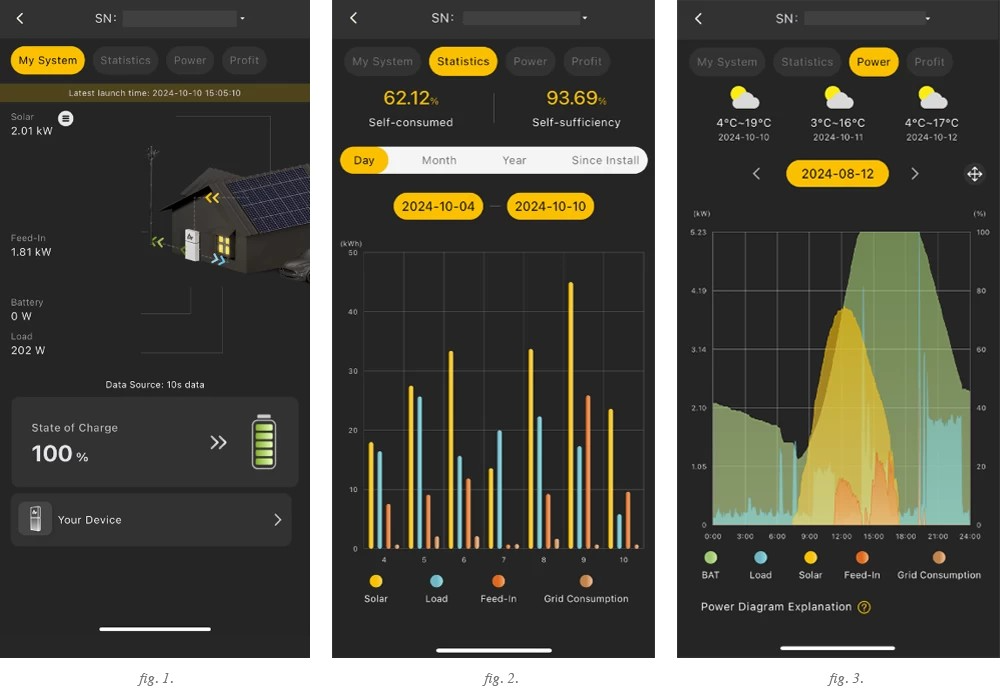
AlphaCloud is one of the most useful tools for managing an Alpha ESS battery.
AlphaESS originally published its AlphaCloud feature guide on 7 September 2020, and the platform remains part of its current residential energy-storage ecosystem. AlphaCloud supports real-time monitoring, charging and discharging schedules, historical energy data, remote firmware updates and system diagnostics.
Check Real-Time Energy Flow
The live system view can show:
- Solar generation
- Household consumption
- Battery charging or discharging
- Battery state of charge
- Grid import
- Grid export
Instead of checking only whether the battery is “full” or “empty”, look at where the energy is flowing.
For example, if the battery regularly remains full while large amounts of solar are exported, your battery may already be fully utilised during those periods.
Review Historical Data
AlphaCloud also provides historical information.
Compare:
- Solar generation
- Household consumption
- Battery charge and discharge periods
- Grid imports
- Grid exports
Looking at several weeks of data can reveal patterns that are difficult to notice from one day.
For example, repeated grid imports during expensive evening periods may indicate that the battery is too small, discharging too early or following an unsuitable schedule.
Use Charging and Discharging Schedules Carefully
AlphaCloud allows supported systems to use scheduled charging and discharging periods.
This can be useful with time-of-use tariffs. However, excessive scheduling can also make the system more complicated than necessary.
Start with a simple strategy. Then, review the results before making further changes.
Keep the Battery Within Suitable Conditions
Temperature can affect battery performance and warranty conditions.
Current AlphaESS SMILE5 information lists an operating temperature range of approximately -10°C to 50°C for supported battery options. AlphaESS warranty documents also include operating-temperature conditions for covered products.
Therefore:
- Keep required ventilation areas clear
- Avoid blocking the battery enclosure
- Follow installation clearances
- Do not relocate the battery yourself
- Report abnormal heat or system warnings to your installer
Most importantly, use the requirements for your exact model rather than treating the temperature range of one AlphaESS product as universal.
Keep Monitoring and Firmware Active
Internet connectivity is useful for more than viewing the app.
AlphaCloud supports remote monitoring, diagnostics and firmware updates.
As a result, maintaining a stable internet connection can make it easier for installers or AlphaESS support to diagnose faults without immediately visiting the site.
If the system goes offline:
- Check whether your home internet is working.
- Confirm whether the AlphaESS system still appears online in AlphaCloud.
- Avoid changing installer-level settings yourself.
- Contact the installer or AlphaESS support if the connection remains unavailable.
Do not install firmware from unofficial sources.
Alpha ESS Battery Capacity and Expansion
Many AlphaESS systems use modular batteries, but expansion rules depend on the specific model.
For example, AlphaESS Australia’s current SMILE5 range lists different battery capacities and module limits depending on the battery paired with the inverter.
Meanwhile, older systems may use other module sizes and expansion limits.
Therefore, before adding another Alpha ESS battery, confirm:
- Exact battery model
- Existing module age
- Supported module count
- Inverter compatibility
- Firmware requirements
- Current approved system configuration
Do not assume that any AlphaESS battery can be added to an existing AlphaESS system.
Backup Power: Know What Your System Can Run
AlphaESS residential systems can provide backup power in supported configurations.
However, battery capacity and backup power are different specifications.
A battery may contain enough energy to run a home for several hours, but the inverter still limits how much power can be supplied at one time.
Therefore, identify which circuits are connected to backup.
Common essential loads may include:
- Refrigerator
- Lighting
- Wi-Fi
- Computers
- Selected power points
Large loads such as air conditioners, electric ovens or EV chargers require more careful system design.
AlphaESS states that supported residential systems can switch to backup rapidly during a grid outage, but exact backup performance depends on the model and installation.
Protect Your Alpha ESS Battery Warranty
Do not judge a battery warranty only by the number of years advertised.
Alpha ESS Australia publishes separate warranty conditions covering eligible products, operating conditions and battery throughput. Its Australian warranty documentation also states that consumer rights under Australian Consumer Law apply in addition to the voluntary warranty.
To reduce warranty problems:
- Use an appropriately qualified installer
- Keep installation records
- Register the system when required
- Maintain internet monitoring where specified
- Follow temperature and operating requirements
- Do not open or modify the battery
- Use approved battery and inverter combinations
If you plan to expand an existing system, confirm warranty implications before purchasing additional modules.
Does an Alpha ESS Battery Qualify for the 2026 Battery Discount?
Some AlphaESS configurations may qualify, but eligibility applies to the exact installed system, not simply the AlphaESS brand.
The Australian Government updated the Cheaper Home Batteries Program rules on 1 May 2026.
Current eligibility includes battery installations between 5kWh and 100kWh nominal capacity, while STCs apply to the first 50kWh of usable capacity, subject to the program’s other requirements.
The Clean Energy Council also maintains a live Approved Batteries List used by rebate programs and electricity networks.
Therefore, before installation or expansion, confirm:
- Exact battery model
- Complete battery configuration
- Inverter or PCE combination
- Current CEC listing
- Current rebate rules
This replaces older advice that simply described AlphaESS batteries as receiving a flat “30% discount”.
Alpha ESS Battery From Solar Rains
Solar Rains currently lists an AlphaESS 5kW inverter and battery all-in-one system for residential applications. The product includes AlphaCloud monitoring and modular battery functionality, although buyers should check the exact stock model and current technical documentation before purchase.
Solar Rains also carries other residential battery and inverter systems for projects requiring different capacities or architectures.
FAQs About Alpha ESS Battery Performance
How often should I check AlphaCloud?
You do not need to watch it every day.
However, checking energy trends every few weeks can help identify changes in battery behaviour, grid use or solar production.
Should I fully discharge my Alpha ESS battery every day?
Not necessarily.
The battery management system controls the operating limits of the system. Avoid manually forcing unusually deep discharge behaviour unless the manufacturer or installer recommends it for your model.
Can I add more AlphaESS batteries later?
Many AlphaESS systems support expansion, but the exact rules vary by model.
Always confirm compatibility before adding new modules.
Why is my battery importing power from the grid?
Possible reasons include:
- Scheduled grid charging
- Low battery state of charge
- Backup reserve settings
- Insufficient solar production
- High household demand
- Tariff-based control settings
Check AlphaCloud first. If the behaviour remains unclear, ask your installer to review the system settings.
Does AlphaESS support VPPs?
Some current AlphaESS residential products are described by the manufacturer as VPP-ready. However, participation still depends on the exact system, electricity retailer and VPP program.
Final Takeaway
Getting better results from an Alpha ESS battery does not require constant adjustment.
Start by understanding your exact model. Then use AlphaCloud to monitor energy flows, align charging with your tariff, set a sensible backup reserve and keep the system within its required operating conditions.
Most importantly, avoid generic settings copied from another battery system. AlphaESS has multiple product generations, so capacity, expansion, warranty and backup specifications should always be checked against the exact equipment installed at your property.
For AlphaESS products and other residential battery solutions, explore the Solar Rains residential battery and inverter range.


