The Critical Role of DC Isolators in Solar Safety
When installing a solar PV system, one of the least visible yet most important components is the DC isolator. Acting as a critical safety switch, it disconnects the DC current between the solar panels and the inverter during maintenance, servicing, or emergency response.
In Australia, DC isolation is not just a best practice. It is part of the safety and compliance framework that applies to solar PV installations. For reference, Energy Safe Victoria guidance on PV d.c. isolators and systems explains the inverter isolation methods recognised under AS/NZS 5033:2021. In our view, this is exactly why DC isolation should be treated as a design essential rather than a minor accessory.
This article explains what a DC isolator is, how it works, why it matters in Australia, and how to choose the right option for your solar installation.
What Is a DC Isolator?
A DC isolator is a manually operated switch that disconnects the direct current (DC) electricity flow between your solar panels and your inverter. It allows technicians to safely service the system without risk of electric shock from the high-voltage DC current.
Key Functions
- Disconnects power at the array level
- Allows safe inverter replacement or fire response
- Meets regulatory compliance (AS/NZS 5033)
How It Works
When activated, the isolator breaks the circuit and stops DC flow. This is particularly crucial because DC current, unlike AC, does not pass through zero voltage, which makes it more difficult to interrupt safely. A good solar isolator is designed to handle arcing and resist heat damage.

AC vs DC Isolators: What’s the Difference?
While both isolators serve safety functions, their applications and construction differ:
| Feature | AC Isolator | DC Isolator |
| Voltage Type | Alternating Current (AC) | Direct Current (DC) |
| Common Use | Disconnect grid from inverter | Disconnect panels from inverter |
| Arc Handling | Easier due to zero-crossing | More complex, needs arc suppression |
| Required By Law (AU) | Only at meter box | Yes, at panel & inverter location |
In Australia, DC isolators are mandatory for rooftop PV systems as per AS/NZS 5033 to ensure solar array safety during maintenance and emergencies.
Why DC Isolators Are Required in Australia
Australia’s climate creates ideal solar conditions, but it also exposes rooftop equipment to heat, UV, and harsh weather. Because of that, safe DC isolation has become a core part of compliant solar system design.
Legal Requirements
Australian solar systems must use compliant DC isolation arrangements that suit the installation method and equipment configuration. Depending on the system design, this may involve a separate DC isolator or an integrated compliant isolator arrangement.
Installers also need to consider product certification, enclosure suitability, current and voltage ratings, and the installation requirements set out in the applicable standards.
Benefits of Compliance
- Faster emergency response
- Simpler shutdown procedures
- Better protection for electricians and first responders
- Improved confidence in long term system safety
Risks of Non Compliance
- Insurance disputes or rejected claims
- Safety hazards during servicing
- System defects or compliance issues
- Greater risk of failure under environmental stress
We believe this is one of those areas where compliance does more than satisfy paperwork. It directly supports safer operation over the life of the system.
Types of DC Isolators and How to Choose
When selecting a DC isolator, consider the following factors.
Rated Voltage and Current
The isolator must be compatible with the output of your solar array. For example, if your system voltage and operating current are higher, the isolator must be rated accordingly so it can disconnect safely under realistic operating conditions.
Number of Poles
- 2 pole for single MPPT
- 4 pole for dual MPPT or string connections
Weatherproofing
Outdoor isolators should have a suitable IP rating to resist dust, water, and UV exposure. For rooftop environments, this is especially important because enclosure failure can lead to water ingress and long term degradation.
Mounting Style
- Surface mounted units are common for rooftop applications
- Din rail units are often used inside enclosures
Arc Suppression Design
Look for products specifically designed for DC switching, with certified arc suppression capability for the voltage range of the system.
Recommended Product from Solar Rains
Explore Solar Rains’ solar isolator range, including:
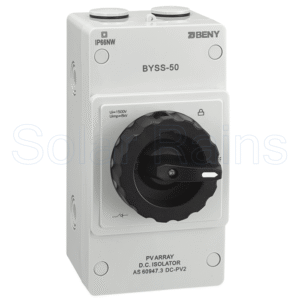
The BYSS series suits rooftop use with a compact, weather resistant design, while the BYT series is a strong option for hybrid and other solar applications where robust protection is needed.
Installation Best Practices
Even the best isolator can underperform if it is installed poorly. Correct placement, cable entry, protection from moisture, and clear labelling all matter.
Key Installation Tips
- Mount the isolator in a compliant and accessible location
- Use UV stabilised conduit for exposed cable runs
- Seal cable entries properly with approved glands
- Ensure the enclosure and mounting method suit the environment
- Apply clear labelling for safe identification and shutdown
My view is that installation quality matters just as much as product selection. A compliant isolator can still become a weak point if water ingress, loose terminations, or poor routing are ignored.
Using qualified installers helps reduce the risk of arcing, enclosure damage, and warranty issues over time.
Safety regulations regarding PV arrays
Under AS/NZS 5033 regulations, understanding what a DC Isolator is and why it is required in Australia is paramount for solar safety. A DC isolator is a heavy-duty switch designed to manually disconnect the high-voltage direct current flowing from your solar panels, providing safe access for emergency responders and electricians. While recent updates to Australian standards allow rooftop DC isolators to be omitted if internal panel microinverters or specific safety devices are used, the vast majority of traditional string systems still mandate robust, weatherproof, and UV-stabilised exterior DC isolators to prevent devastating electrical fires.
Common DC Isolator Issues and How to Prevent Them
Water Ingress
Seal all cable entries with approved glands and position the isolator to reduce direct exposure to driven rain wherever possible.
Arcing Due to Overload
Match the isolator current rating to the array specifications. Avoid string configurations that push the device beyond its intended operating limits.
Heat Damage
Do not place the isolator where it will be unnecessarily exposed to extreme heat build up. Where practical, use protective placement or covers suited to the installation.
Incompatible Switches
Do not use AC rated switches on DC solar circuits. They are not designed to interrupt DC arcs safely.
FAQs
AC isolators disconnect alternating current (used at the meter); DC isolators break high-voltage DC from solar panels, requiring different arc suppression and ratings.
In rooftop installations, near the solar array and accessible from the ground. Both rooftop and inverter-side isolators may be required.
No. Only certified DC isolators meet solar safety and voltage interruption standards.
No. Choose isolators based on array voltage, string count, and installation environment.
At least once a year, or after major weather events. Look for discoloration, signs of melting, or water ingress.
Only if the switch is rated for “under load” disconnection. Otherwise, wait until panel output drops (e.g., late evening).
A protective shield that prevents dust, water, and accidental contact. It extends the product’s lifespan, especially outdoors.
Conclusion & Expert Advice
In Australia, DC isolators are a safety essential, not an afterthought. Whether you’re a homeowner, installer, or commercial operator, ensuring your solar system includes certified, well-installed DC isolators helps protect lives and property.
For trusted products, Solar Rains offers a curated range of DC isolators that meet all Australian standards. From ZJ Beny BYSS to BYT series with isolator covers, you’ll find the right switch to match your system size, inverter type, and environmental exposure.
Need help selecting the right model? Reach out to the Solar Rains technical team for guidance tailored to your installation needs.