
Introduction
As electricity prices rise and energy security becomes a top concern for Australian households and businesses, hybrid batteries are becoming essential components of solar energy systems. Whether you are planning an off-grid solar setup in a remote location or upgrading an existing grid-connected system to a hybrid configuration, understanding how to design your system is critical to maximizing efficiency, reliability, and financial savings.
In 2025, Australia’s rooftop solar market continues to grow, with millions of households and small businesses installing solar panels. Increasingly, these systems are paired with battery storage to store excess energy for nighttime use or during peak electricity pricing. The addition of a hybrid battery ensures that solar energy can be used effectively, either independently of the grid or in combination with it, providing energy independence, cost savings, and sustainability benefits.
This guide will provide a comprehensive overview of designing off-grid and hybrid solar systems, helping you choose between upgrading panels, replacing systems, or integrating hybrid batteries to meet your energy needs.
Understanding Hybrid Battery
What is a Hybrid Battery?
A hybrid battery is an advanced energy storage device capable of working both with solar panels and with the electricity grid. Unlike traditional batteries, hybrid batteries can:
- Store excess solar energy generated during the day
- Supply stored energy at night or during peak electricity periods
- Charge from the grid if needed
- Integrate with both off-grid and grid-connected systems
This flexibility makes hybrid batteries an ideal choice for residential and commercial solar systems.
Types of Hybrid Battery
- Lithium-ion hybrid batteries
- High efficiency (90–95%)
- Long lifespan: 10–15 years
- Compact design
- Lead-acid hybrid batteries
- Lower upfront cost
- Shorter lifespan: 5–8 years
- Requires regular maintenance
- Flow batteries
- Scalable for larger energy demands
- Excellent lifespan (>15 years)
- Typically used in commercial or utility-scale systems
The choice of battery type depends on your energy consumption, budget, and system design.
Off-Grid vs. Hybrid Solar Systems
Off-Grid Solar Systems
- Completely independent of the electricity grid
- Relies entirely on solar panels and batteries for energy supply
- Ideal for remote homes, cabins, or areas with unreliable grid access
Advantages:
- Full energy independence
- Reliable power in remote areas
- Complete control over energy production and consumption
Limitations:
- Higher upfront cost due to larger battery storage
- Requires careful sizing and monitoring to avoid power shortages
Hybrid Solar Systems
- Connected to the electricity grid but includes a hybrid battery
- Can store excess energy or draw from the grid when solar production is insufficient
- Suitable for urban and suburban homes looking for cost savings and backup power
Advantages:
- Lower energy bills by using stored solar energy
- Backup during blackouts if configured properly
- Participation in Virtual Power Plant (VPP) programs to sell excess energy
Limitations:
- Slightly more complex installation
- ROI depends on local electricity tariffs and incentives
Components of a Hybrid Solar System
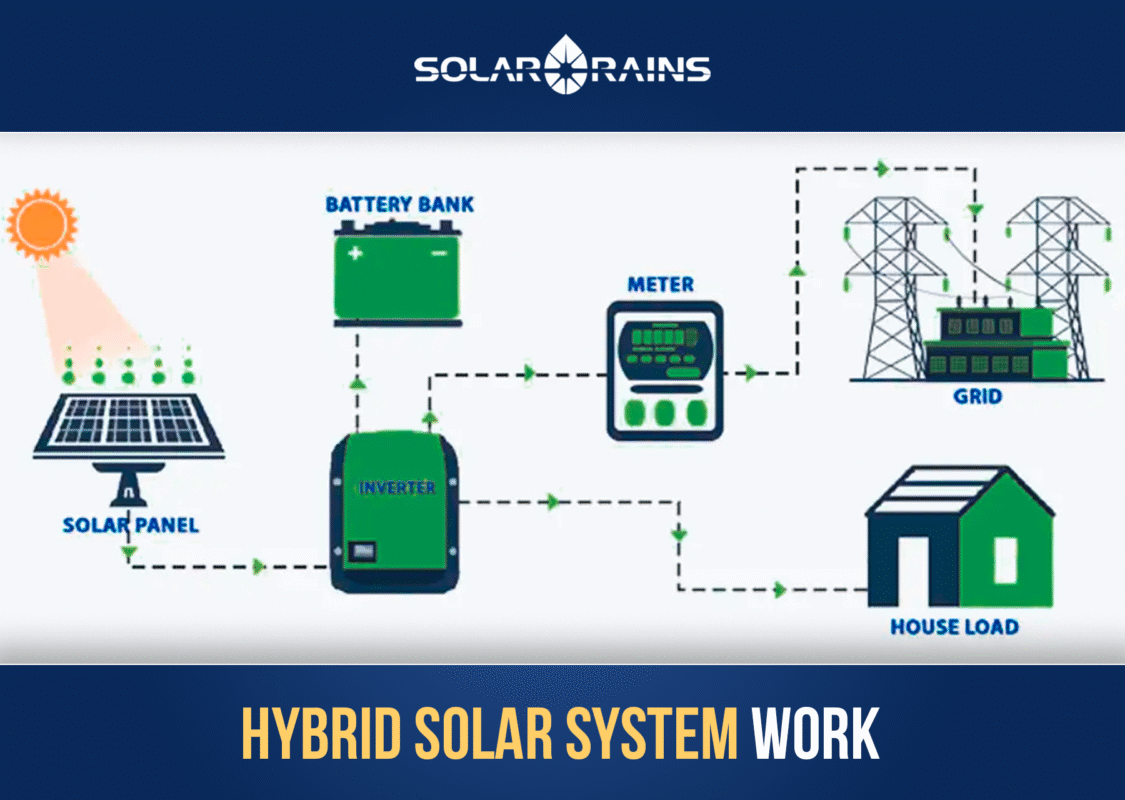
A well-designed hybrid solar system includes several critical components:
- Solar Panels
- Converts sunlight into electricity
- Sizing depends on daily energy demand, roof space, and budget
- Hybrid Battery
- Stores excess energy
- Key for off-grid systems or peak load optimization
- Hybrid Inverter
- Converts DC electricity from panels and battery to AC for home use
- Manages charging and discharging of the battery
- Monitors energy flow
- Charge Controller
- Protects the battery from overcharging
- Optimizes battery lifespan
- Monitoring & Automation
- Mobile or web apps to track energy production, consumption, and storage
- Enables smart scheduling and VPP participation
When is the Right Time to Reinvest in Your Solar?
Reinvesting in solar might be necessary if:
- Panels or inverters are older than 10 years
- Energy bills are rising due to increased household consumption
- You want to add hybrid battery storage for nighttime usage
- Your system no longer meets current household or business energy demand
Investing in a hybrid battery at the right time can enhance efficiency, provide backup power, and increase long-term savings.
The 3 Main Options: Upgrading Your Energy
Upgrading Your Solar System
- Add more panels to meet growing energy needs
- Combine with a hybrid battery to store excess energy
- Cost-effective for households with ample roof space
Replacing Your Entire System
- Necessary when panels or inverters are degraded or obsolete
- Opportunity to integrate high-efficiency panels and hybrid battery storage
- Ensures full system performance and maximized ROI
Adding a Hybrid Battery
- Store energy for evening or peak-hour consumption
- Participate in grid services and VPP programs
- Ideal for households or businesses seeking energy independence
How to Choose Between More Solar or a Hybrid Battery
Factors to consider:
- Energy Consumption Patterns
- High daytime use: more panels may be optimal
- High night-time use: a hybrid battery is better
- Roof Space & Solar Access
- Limited roof space favors batteries
- Sufficient roof space allows a combination of panels + battery
- Electricity Tariffs & Incentives
- High time-of-use rates increase the value of stored energy
- Rebates for hybrid batteries can improve ROI
- Future Proofing
- Consider adding EV charging or expanding energy needs
Sizing Your Hybrid Battery
- Typical household: 5–15 kWh\
- Small business: 20–100 kWh depending on energy demand
- Rule of thumb: Battery capacity should cover 1–2 days of average energy use
- Ensure inverter compatibility and smart monitoring for optimization
Example: A 10 kWh battery can store excess solar energy to power a 4-person household through peak evening hours, potentially saving $400–$600/year.
Benefits of Hybrid Batteries
- Energy Independence – Reduce reliance on the grid
- Lower Electricity Bills – Store and use your own solar energy
- Backup Power – Provides electricity during outages
- Environmental Impact – Reduces greenhouse gas emissions
- Revenue Opportunities – Participate in Virtual Power Plants (VPPs)
Government Incentives & Policies
- Small-scale Renewable Energy Scheme (SRES) – Rebates for solar panels and hybrid batteries
- Cheaper Home Batteries Program – ~30% discount on eligible batteries
- State Programs – Support for off-grid or hybrid systems in Victoria, NSW, and Queensland
These programs make investing in hybrid batteries more accessible and financially attractive.
Common Design Mistakes to Avoid
- Undersizing the battery for your energy needs
- Choosing an incompatible inverter
- Ignoring temperature and environmental conditions
- Failing to plan for maintenance and monitoring
A properly designed system ensures maximum efficiency, reliability, and ROI.
Designing a reliable off-grid system in Australia requires a different logic than standard rooftop solar. You must account for ‘Days of Autonomy‘ – how long your lithium or hybrid battery can power your home without any sun. A professional design following AS/NZS 4777.2 and AS/NZS 5033 will ensure your inverter and MPPT chargers are matched to your peak winter loads. Avoid the common mistake of undersizing your solar array; in a hybrid battery setup, having ‘too much’ solar is often the cheapest way to ensure your batteries stay healthy and fully charged during overcast periods.
Case Studies
Residential Example
- 5 kW rooftop solar
- 10 kWh hybrid battery
- Daily self-consumption: 80%
- Annual savings: ~$500–$700
Commercial Example
- 50 kW solar array
- 60 kWh hybrid battery
- Peak demand reduction: 25%
- ROI within 7–8 years
Getting Professional Advice
- Consult licensed solar installers for system design
- Compare multiple proposals for panels, inverters, and batteries
- Confirm rebate eligibility and system compatibility
Conclusion
Whether you choose to upgrade your solar panels, replace your system, or invest in a hybrid battery, the goal is to maximize energy efficiency, cost savings, and sustainability.
Hybrid batteries are the key to:
- Energy independence
- Backup power
- Lower electricity bills
- Revenue through VPP participation
For tailored solutions, contact Solar Rains to design a system optimized for your home or business.
FAQs
A battery that can store solar energy for later use and interact with the grid for hybrid systems.
Typically 10-15 years, depending on cycles and maintenance.
Yes, if the system has a compatible inverter or is battery-ready.
Yes, via programs like SRES and the Cheaper Home Batteries Program.
By participating in Virtual Power Plants (VPPs) or exporting stored energy to the grid.


