

Australia’s energy landscape is rapidly changing. With electricity prices rising and blackouts becoming more frequent, more households are looking for energy independence, and home batteries are stepping up as the smart solution.
If you already have solar panels or plan to install them soon, understanding how a home battery fits into your system is essential. In this guide, Solar Rains breaks down everything you need to know: how home batteries work, the types available, safety features, and whether it’s worth the investment in 2025.
What Is a Home Battery?
A home battery is a rechargeable energy storage system that stores excess electricity, usually generated by solar panels, for use when the sun isn’t shining. Instead of sending unused energy back to the grid for a low feed-in tariff, you store it and use it on your terms.
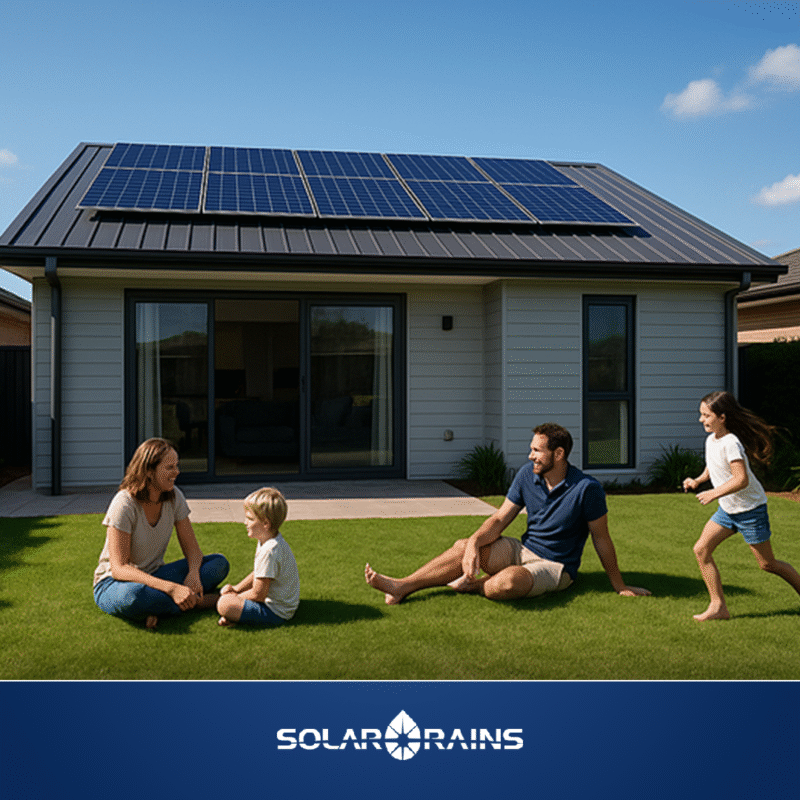
This means:
- Power during blackouts
- Reduced reliance on the grid
- Lower electricity bills
- Better return on your solar investment
In essence, a home battery turns your solar panel system into a complete energy ecosystem.
How Does It Work?
A typical setup includes:
- Solar panels collect sunlight and convert it to DC electricity.
- An inverter converts the electricity into AC power for your home.
- Any excess energy not used immediately is stored in your battery.
- When solar isn’t available (at night or on cloudy days), your battery powers your home.
There are also hybrid inverters that combine battery and solar management into one unit, making the setup more efficient and cost-effective.
For homes still connected to the grid, the system can be configured to:
- Export excess to the grid
- Draw from the grid when necessary
- Use time-of-use tariffs for optimal savings
Main Types of Home Batteries
Not all home batteries are created equal. Here are the most common types you’ll see in 2025:
Lithium-Ion Batteries
- Most common today (e.g., Tesla Powerwall, Deye, Swatten)
- High energy density
- Long lifespan (10–15 years)
- Low maintenance
Lead-Acid Batteries
- Cheaper upfront
- Shorter lifespan (3–5 years)
- Bulky, heavier, require ventilation
- Ideal for off-grid or short-term setups
Flow & Saltwater Batteries (Emerging)
- Eco-friendly and recyclable
- Longer cycle life
- Still under development for household use
All-in-One vs Modular
- All-in-One Systems include inverter, battery, and monitoring in a single box (e.g., Swatten Stackable Battery)
- Modular Systems let you add capacity over time
Benefits of a Home Battery System
Energy Independence: Power Your Life on Your Terms
One of the most compelling reasons homeowners invest in home battery systems is the promise of energy independence. Instead of relying entirely on your electricity provider, you store the energy you generate during the day-especially when the sun is at its pea, and use it later when you actually need it, like during the evening or on cloudy days.
This independence shields you from volatile electricity prices and gives you greater control over your household energy usage. You’re no longer just a passive consumer, you become your own energy provider.
Expert insight: According to the Clean Energy Council, households that combine solar panels with a battery can cover up to 80-90% of their annual energy needs without drawing from the grid.
Lower Power Bills: Slash Your Energy Costs
With a home battery, you can store cheap or free solar energy and use it during expensive peak tariff periods, typically between 4 PM and 9 PM, when electricity rates spike.
If your energy plan includes time-of-use billing, this strategy maximises your savings by drawing from your battery during high-cost periods instead of paying grid prices. Even in flat-rate plans, avoiding grid use altogether can still significantly lower your bills.
Tip: Solar Rains offers hybrid inverter systems that intelligently manage when to charge/discharge your battery to match peak and off-peak rates.
Backup Power: Stay Online During Grid Failures
For homeowners in blackout-prone regions like South Australia, Queensland, and rural NSW, the value of a home battery becomes crystal clear when the grid goes down.
Unlike standard solar systems that shut off during outages (due to safety regulations), systems with backup battery functionality can isolate from the grid and continue powering essential circuits, like lighting, internet routers, fridges, and medical devices.
Example: The Deye 6.14kWh Battery paired with a compatible hybrid inverter supports black start capability, meaning your lights stay on when the rest of the street goes dark.
Environmental Impact: Reduce Your Carbon Footprint
By storing and using your own clean solar energy, you directly reduce your home’s demand on the national grid, much of which still relies on coal-fired or gas-powered electricity.
Every kilowatt-hour (kWh) of solar energy you store and use offsets emissions from fossil fuels. And because your system stores what would otherwise be wasted (e.g., excess solar exported during low-demand midday hours), it contributes to grid efficiency and avoids unnecessary transmission losses.
Fact: A typical Australian home with a solar battery can reduce annual CO₂ emissions by up to 2.5 tonnes, equivalent to planting over 40 trees each year.
Access to Rebates & Incentives: Lower Upfront Cost
Government incentives make home battery systems more financially accessible than ever:
Small-scale Renewable Energy Scheme (SRES):
Offers upfront discounts via Small-scale Technology Certificates (STCs) when you install eligible solar and battery systems.
Cheaper Home Batteries Program (CHBP):
Launched in 2025, this federal scheme provides an average 30% subsidy on approved batteries for households, businesses, and community groups. Over 50,000 homes have already claimed the discount within the first 2 months of rollout.
Check your eligibility: Visit Solar Rains’ Battery Subsidy Guide or consult our team for a free eligibility check and quote.
Is It Worth It? ROI & Cost Considerations
A quality home battery system in 2025 can cost anywhere from $8,000 to $14,000, including installation. However, many factors affect your return on investment:
- Solar system size
- Household energy usage
- Local electricity rates
- Feed-in tariffs
- Battery size and type
- Available rebates
Payback periods typically range from 7 to 10 years. But with electricity rates rising and solar tariffs falling, home batteries are becoming more financially viable.
Maintenance & Safety Overview
Home batteries require minimal maintenance, especially lithium-ion models. Still, safety is critical.
Key Safety Features:
- Battery Management System (BMS): regulates temperature, voltage & charging cycles
- Thermal protection: prevents overheating
- Fire-resistant casings
- Compliance with AS/NZS 5139 safety standards
- Installation by CEC-accredited professionals
Solar Rains only supplies battery systems that meet Australian safety regulations and undergo strict quality assurance.
Who Should Consider a Home Battery?
Home batteries aren’t one-size-fits-all. They’re ideal for:
- Households with large solar systems (5kW+)
- People using energy-hungry appliances (e.g., EV chargers, heat pumps)
- Homes in blackout-prone regions
- Families with high evening energy usage
- Environmentally-conscious homeowners
If you’re unsure whether a battery suits your needs, our experts at Solar Rains can help you make an informed decision.
Recommended Solar Rains Products
Solar Rains offers best-in-class storage options for both residential and commercial customers:
Swatten Stackable Battery – 9.6/12.8kWh
- All-in-one design
- Expandable system
- Ideal for family homes with solar

Deye 6.14kWh Wall-Mounted Battery
- Compact and efficient
- Great for small-to-medium homes
- Works seamlessly with Deye hybrid inverters

Sofar PowerAll All-in-One ESS
- Modular, scalable system with IP65 rating
- Suitable for residential and commercial applications
- Ideal for sustainable, long-term energy storage

FAQs: Home Battery Essentials
Most lithium-ion batteries last between 10-15 years, depending on use and environment.
Yes! Most systems can be retrofitted. We recommend a site inspection to assess compatibility.
Yes, but only if the system includes blackout protection (not all do). Ask your installer to confirm.
Average homes use 6-10kWh/day during non-solar hours. A 10kWh battery is a common choice for households with a 5-6kW solar system.
Most modern batteries come with mobile apps for real-time monitoring and smart energy management.
Final Thoughts: Should You Get a Home Battery?
Home batteries are no longer just a luxury for the eco-conscious, they’re fast becoming a practical, cost-effective tool for modern Australian homes. They provide security, control, and efficiency in an increasingly uncertain energy market.
Whether you’re upgrading an existing system or starting fresh, a home battery can dramatically improve your solar savings and energy independence.
Ready to make the switch? Explore our full Residential Battery & Inverter Collection or Contact Solar Rains for expert advice today.


