
Deye Residential All-in-one BESS – 3 Phases 5kW, 6kW, 8kW, 10kW or 12kW Hybrid Inverter Only | Battery Kit PDU3 and Base – Expandable
Price range: $557.00 through $2,933.00
Add the product to your cart and request a quote at checkout
Description
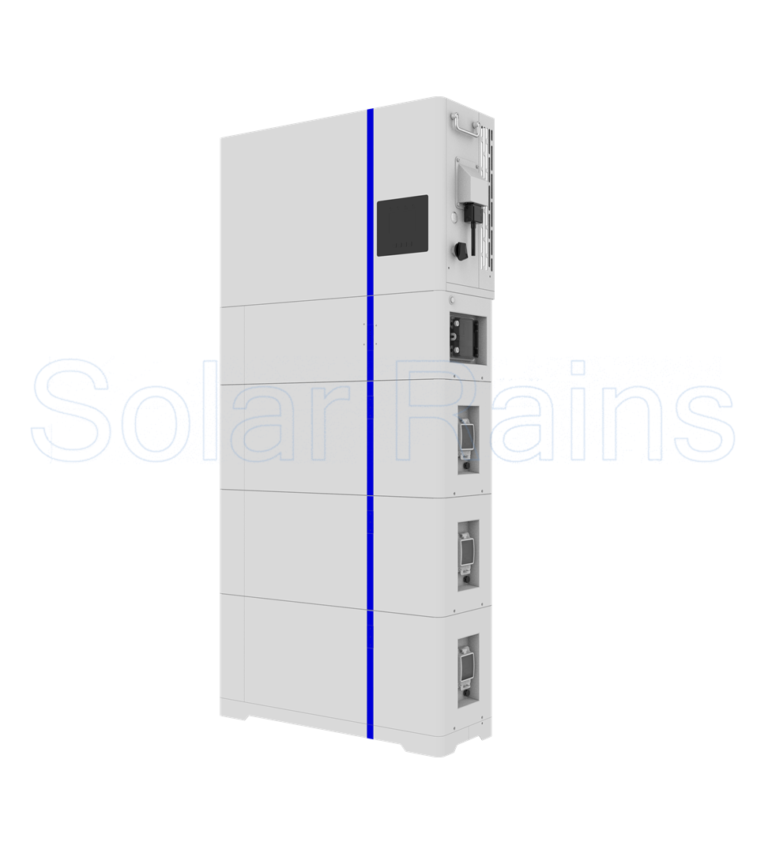
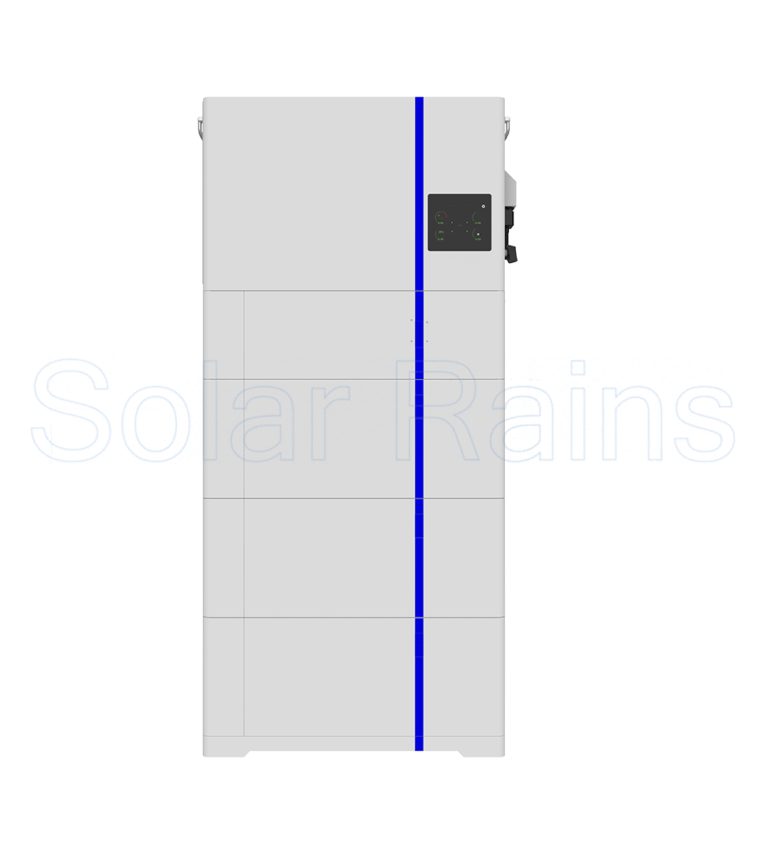
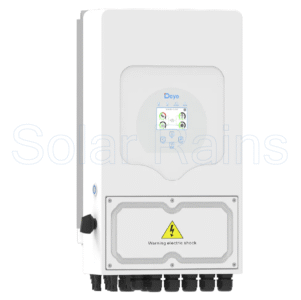
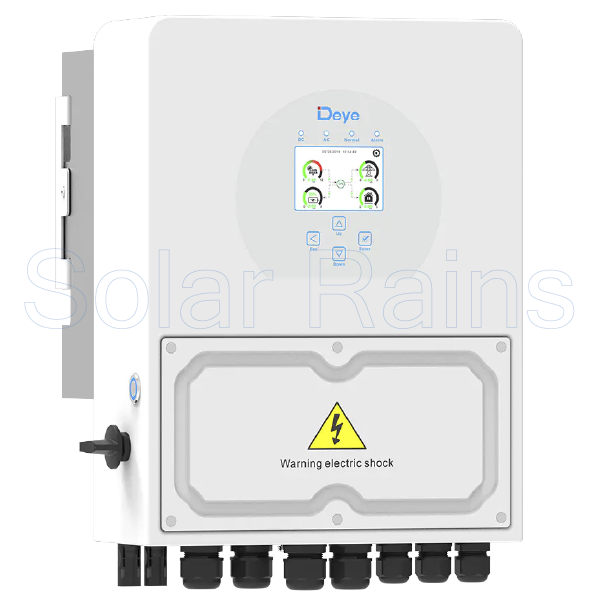
The Deye three phase all-in-one ESS combines a three-phase hybrid inverter and modular LiFePO4 battery storage in one integrated residential energy system. Solar Rains offers the 5kW, 6kW, 8kW, 10kW and 12kW three-phase configurations, together with the expandable AI-W5.1-PDU3-B battery kit for projects requiring flexible storage capacity.
The system operates on a three-phase 220/380V or 230/400V grid and uses Deye AI-W5.1-B 5.12kWh battery modules. A standard stack can be configured from approximately 5kWh to 30kWh, while the battery platform specification allows expansion up to 36 modules in parallel, with a maximum stated capacity of approximately 184kWh.
Each inverter size is designed for a different power requirement. Nominal output ranges from 5kW to 12kW, while maximum PV input power ranges from 8kW on the 5kW model to 19.2kW on the 12kW model. Maximum battery charging and discharging current increases from 120A to 240A across the range. All five models use the same 44.8–57.6V low-voltage battery architecture.
The result is a scalable Deye residential energy storage system designed for solar self-consumption, backup operation, time-of-use control and flexible household energy management without requiring separate standalone inverter and battery enclosures.
Key Features of DEYE Three Phase All-In-One ESS
- Five three-phase power options: 5kW, 6kW, 8kW, 10kW and 12kW nominal output, each with equivalent UPS output capacity.
- Integrated inverter & battery design: The Spring AI Series combines a hybrid inverter with LFP battery storage in a vertically stacked system.
- Modular storage capacity: Each AI-W5.1-B module provides 5.12kWh, with 1–6 modules forming approximately 5–30kWh per standard stack.
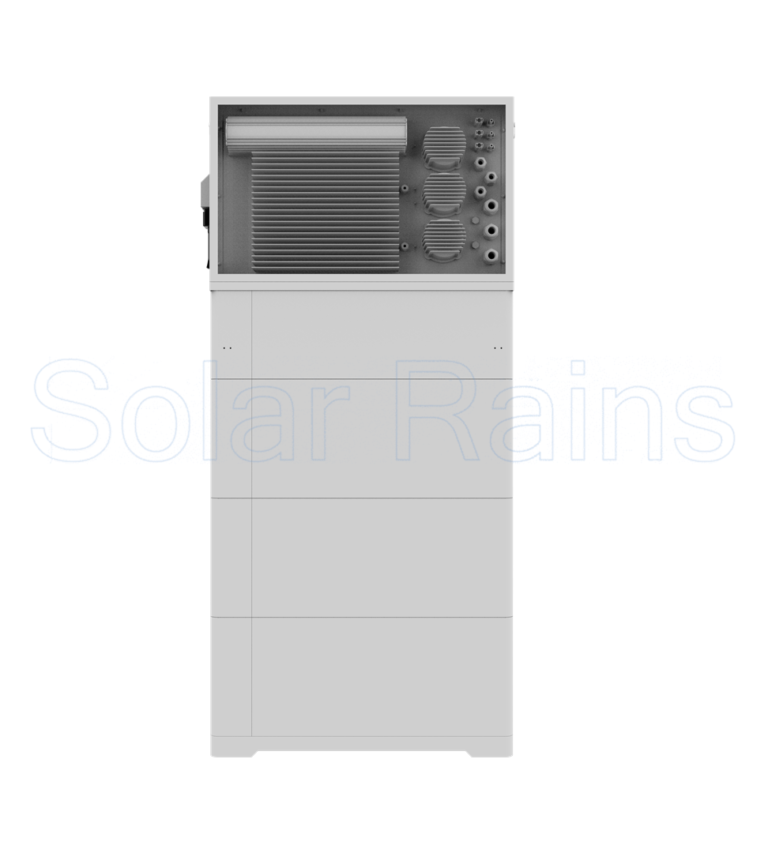
- Expandable PDU3 Battery Kit: The AI-W5.1-PDU3-B + Base option supports 2–6 battery modules, providing approximately 10–30kWh of storage in an expandable battery stack.
- High PV capability: Maximum PV input power is 8kW, 9.6kW, 12.8kW, 16kW and 19.2kW respectively across the 5–12kW models.
- Dual MPPT architecture: Two MPP trackers support flexible PV string configuration, with an MPPT operating range of 200–650V.
- Fast backup response: Deye specifies a 4ms switching time for improved energy security during grid interruption.
- On-grid, off-grid & UPS modes: The inverter supports multiple programmable operating modes, along with configurable battery/grid priority, time-of-use operation and Smart Load functionality.
- Generator integration: AC, solar and generator charging priority can be configured through the inverter interface.
- High efficiency: Maximum inverter efficiency is 97.6%, with maximum charging/discharging efficiency of 95.5%.
- IP65 after stacking: The completed system is rated IP65 and uses LiFePO4 battery chemistry.
- Long-cycle battery design: ≥6,000 cycles under Deye’s specified test conditions of 25°C ±2°C, 0.5C/0.5C, 90% DoD and 70% EOL.
- 10-year warranty: Subject to the conditions in the applicable Deye Warranty Letter.
Main Benefits
For Homeowners
The integrated architecture provides a straightforward way to combine solar generation, battery storage and three-phase household power management. The system supports self-consumption, grid feed-in, time-of-use operation and backup modes, allowing stored solar energy to be managed according to household requirements. Its 4ms switching capability is particularly useful where continuity for backup loads is important.
Battery capacity can also grow with changing energy requirements. Rather than choosing a fixed battery size from the beginning, the modular AI-W5.1-B platform allows storage to be configured in 5.12kWh increments.
For Solar Designers & Electrical Engineers
The five inverter sizes make the Deye low voltage ESS suitable for different three-phase residential load profiles while maintaining the same battery architecture. A wide 200–650V MPPT range, two MPPT trackers, configurable charge/discharge current and up to twice rated off-grid peak power for 10 seconds provide useful flexibility when matching PV, battery and load requirements.
The system also supports CAN2.0 BMS communication and meets AS4777.2 among its listed grid regulations, which is relevant when specifying the system for Australian projects.
For Installers & EPC Contractors
The flat, stacked format is specifically designed to reduce installation complexity. Deye describes the system as requiring no additional inter-module wiring and highlights quick installation as a key feature.
Using a common 5.12kWh battery module across the range also simplifies system configuration. Installers can build storage around the required project capacity instead of handling multiple unrelated battery formats.
For Distributors & Solar Retailers
The same platform covers five three-phase inverter ratings plus the standalone PDU3 battery expansion kit. This creates a flexible product family for projects requiring different combinations of output power and battery capacity without moving to an entirely different storage architecture.
Installation
Installation of this Deye three phase all-in-one ESS must be performed by qualified personnel. Deye requires permanent grounding and compliance with applicable local electrical requirements. The manual also states that battery modules are heavy and must be handled by at least two people using the designated handles.
Step 1: Check the Equipment & Select the Site
Before installation, inspect the inverter, battery modules, PDU3, base and supplied accessories for damage.
Choose a clean, flat installation area away from fire and water sources. Although the completed system is rated IP65, Deye instructs installers to avoid direct sunlight, direct rain or snow exposure, highly flammable or explosive areas, humidity above 95% and installation above approximately 2,000m altitude.
Step 2: Position the Battery Base
Place the AI-W5.1-Base at the selected position and maintain approximately 10–35mm between the base and wall.
Each AI-W5.1-B battery module weighs approximately 55kg, so Deye requires at least two installers for safe handling.
Step 3: Stack the Battery Modules
Place the first battery module onto the base and align the blind-mating connector with the base connection. Additional battery modules are then stacked vertically, connecting the upper module directly to the one below.
Repeat this process until the required battery capacity is reached. A standard inverter stack supports up to six 5.12kWh modules.
Step 4: Install the PDU3
Once the battery modules are stacked, install the PDU3 on top. Secure the base-to-battery, battery-to-battery and battery-to-PDU connections using the specified M4×6 screws.
The PDU wall-fixing plate is then secured to the wall. Deye specifies two 10mm holes approximately 100–110mm deep, followed by M6×100 expansion screws. The PDU fixing hardware is tightened to the torque stated in the manual.
For customers purchasing the Battery Kit – PDU3, the AI-W5.1-PDU3-B is supplied with the battery base. The brochure specifies a 720 × 255 × 228mm PDU weighing 15kg and containing a built-in 250A 2P circuit breaker. The PDU3 configuration supports 2–6 modules for approximately 10–30kWh storage.
Step 5: Complete Electrical Connections
A qualified installer can then complete the battery, PV, grid, backup load and mandatory earth connections according to Deye’s wiring diagrams.
The system also provides interfaces for CTs, BMS communication, parallel communication, meter communication, Wi-Fi, generator control and Smart Load functions. The three-phase model uses CT connections across L1, L2 and L3 where required for zero-export control.
Step 6: Commission the System
After checking polarity, cable connections, grounding and mechanical fixings, the inverter can be commissioned through its LCD interface.
Operating settings can then be configured for battery charging, solar/grid/generator priority, on-grid or off-grid operation, time-of-use scheduling and Smart Load control. Wi-Fi monitoring is also supported by the system.
Deye
Ningbo Deye Inverter Technology Co., Ltd. was founded in 2007 and develops integrated photovoltaic and energy storage solutions for residential, commercial and industrial applications. Its portfolio includes PV inverters, hybrid inverters, microinverters and battery-based energy storage products.
Deye states that cumulative inverter shipments exceeded five million units by the end of 2025, including two million hybrid inverters. The company positions itself as a one-stop provider of PV and energy storage solutions and develops battery product lines designed to integrate with its inverter portfolio.
Solar Rains is offering the 5kW, 6kW, 8kW, 10kW and 12kW three-phase models. Each provides matching nominal inverter and UPS output power, with AC output at 220/380V or 230/400V three phase.
Each AI-W5.1-B module provides 5.12kWh. A standard integrated stack supports 1–6 modules, providing approximately 5–30kWh. The wider battery specification also lists support for up to 36 modules in parallel, with maximum capacity of approximately 184kWh, subject to the appropriate system configuration.
The expandable AI-W5.1-PDU3-B + Base option is a battery control and support package designed to connect an AI-W5.1-B battery stack with the inverter. It supports 2–6 modules, corresponding to approximately 10–30kWh, and the PDU3 includes a built-in circuit breaker.
Yes. The inverter supports on-grid, off-grid and UPS modes. Deye’s brochure specifies a 4ms switching time, and the technical specification lists off-grid peak output of up to twice rated power for 10 seconds.
Yes. The official manual includes a dedicated generator port and configurable AC/solar/generator charging priority. It also provides a generator start dry-contact signal for supported system configurations.
The completed Deye battery storage system is rated IP65 after stacking, but Deye still requires correct site selection. Direct sunlight, rain, snow, excessive humidity and unsuitable hazardous environments should be avoided to protect long-term operation.
| Dimensions and Weights | |
|---|---|
| SKU | AI-W5.1-5P3-AU-B |
| Weight | 38 kg |
| Dimensions | 72 x 25.5 x 44 cm |
| Dimensions and Weights | |
|---|---|
| SKU | AI-W5.1-6P3-AU-B |
| Weight | 38 kg |
| Dimensions | 72 x 25.5 x 44 cm |
| Dimensions and Weights | |
|---|---|
| SKU | AI-W5.1-8P3-AU-B |
| Weight | 38 kg |
| Dimensions | 72 x 25.5 x 44 cm |
| Dimensions and Weights | |
|---|---|
| SKU | AI-W5.1-10P3-AU-B |
| Weight | 38 kg |
| Dimensions | 72 x 25.5 x 44 cm |
| Dimensions and Weights | |
|---|---|
| SKU | AI-W5.1-12P3-AU-B |
| Weight | 38 kg |
| Dimensions | 72 x 25.5 x 44 cm |
| Dimensions and Weights | |
|---|---|
| SKU | AI-W5.1-PDU3-B+Base - expandable |
| Weight | 21.5 kg |
| Dimensions | 72 x 25.5 x 29.6 cm |
| Download Area | |
|---|---|
Residential All-in-one 3 Phases Hybrid Inverter Datasheet | Download |
Residential All-in-one 3 Phases Hybrid Inverter Manual | Download |
| Parameter | Value |
|---|---|
| Model | AI-W5.1-5P3-AU-B |
| System Specification | |
| Nominal Output Power/UPS Power (W) | 5000 / 5000 |
| AC Output Frequency and Voltage | 50/60Hz; 3L/N/PE 220/380, 230/400Vac |
| Grid Type | Three Phase |
| Recommended Energy Configuration | 5kWh (Min.) |
| Max. Charging/Discharging Current (A) | 120 |
| Battery Operating Voltage (V) | 44.8 ~ 57.6 |
| Battery Chemistry | LiFePO4 |
| IP Rating of Enclosure | IP65 (after stacking) |
| System Certification | IEC62619, IEC60730, CE, VDE2510-50, CEI 0-21 |
| Warranty [1] | 10 years |
| Inverter Technical Specification | |
| Max. PV Access Power (W) | 10000 |
| Max. PV Input Power (W) | 8000 |
| Max PV Input Voltage (V) | 800 |
| Rated PV Input Voltage (Vdc) | 550 |
| Start Up DC Voltage (Vdc) | 160 |
| MPPT Voltage Range (Vdc) | 200~650 |
| Max. PV Input Current (A) | 36+20 |
| Max. PV Short-circuit Current (A) | 54+30 |
| No. of MPP Trackers | 2/2+1 |
| Peak Power (off grid) | 2 time of rated power, 10s |
| Power Factor | 0.8 leading to 0.8 lagging |
| DC injection current (mA) | THD<3% (Linear load<1.5%) |
| Display | LCD |
| Relative Humidity | 0% ~ 100% (No Condensing) |
| Dimension (W x D x H, mm) | 720x255x440 |
| Weight (kg) | 38 |
| Communication with BMS | CAN2.0 |
| EMC/Safety Regulation | IEC/EN 62109-1, IEC/EN 62109-2, IEC/EN 61000-6-1, IEC/EN 61000-6-2, IEC/EN 61000-6-3, IEC/EN 61000-6-4 |
| Grid Regulation | VDE4105, IEC61727/62116, VDE0126, AS4777.2, CEI 0-21, EN50549-1, G98, G99, C10-11, UNE217002, NBR16149/NBR16150 |
| Max. Efficiency | 97.60% |
| Max. charging/discharging efficiency | 95.50% |
| Battery Technical Specification | |
| Built-in Circuit Breaker | 125A 2P, 60Vdc |
| Nominal Voltage (V) | 51.2 |
| Battery Module Energy (kWh) | 5.12 |
| Module Scalability | Max.36 pcs in parallel (Max. capacity of 184kWh) |
| Battery Module Dimension | 720*255*300 (W x D x H, mm) |
| Battery Base Dimension | 720*255*68 (W x D x H, mm) |
| Battery PDU3 Dimension | 720*255*228 (W x D x H, mm) |
| Battery Module Weight (kg) | 55 |
| Operating Temperature Range | Charge: 0~55℃ / Discharge: -20℃ ~ +55℃ |
| Cycle Life | ≥6000 (25℃±2℃, 0.5C/0.5C, 90%DOD,70%EOL) |
| Battery Module Certification | <IEC62619, CE, UK, VDE2510-50, CEI 0-21, UN38.3, CE-LVD, CEC |
| Parameter | Value |
|---|---|
| Model | AI-W5.1-5P3-AU-B |
| System Specification | |
| Nominal Output Power/UPS Power (W) | 5000 / 5000 |
| AC Output Frequency and Voltage | 50/60Hz; 3L/N/PE 220/380, 230/400Vac |
| Grid Type | Three Phase |
| Parameter | Value |
|---|---|
| Model | AI-W5.1-6P3-AU-B |
| System Specification | |
| Nominal Output Power/UPS Power (W) | 6000 / 6000 |
| AC Output Frequency and Voltage | 50/60Hz; 3L/N/PE 220/380, 230/400Vac |
| Grid Type | Three Phase |
| Recommended Energy Configuration | 10kWh (Min.) |
| Max. Charging/Discharging Current (A) | 135 |
| Battery Operating Voltage (V) | 44.8 ~ 57.6 |
| Battery Chemistry | LiFePO4 |
| IP Rating of Enclosure | IP65 (after stacking) |
| System Certification | IEC62619, IEC60730, CE, VDE2510-50, CEI 0-21 |
| Warranty [1] | 10 years |
| Inverter Technical Specification | |
| Max. PV Access Power (W) | 12000 |
| Max. PV Input Power (W) | 9600 |
| Max PV Input Voltage (V) | 800 |
| Rated PV Input Voltage (Vdc) | 550 |
| Start Up DC Voltage (Vdc) | 160 |
| MPPT Voltage Range (Vdc) | 200~650 |
| Max. PV Input Current (A) | 36+20 |
| Max. PV Short-circuit Current (A) | 54+30 |
| No. of MPP Trackers | 2/2+1 |
| Peak Power (off grid) | 2 time of rated power, 10s |
| Power Factor | 0.8 leading to 0.8 lagging |
| DC injection current (mA) | THD<3% (Linear load<1.5%) |
| Display | LCD |
| Relative Humidity | 0% ~ 100% (No Condensing) |
| Dimension (W x D x H, mm) | 720x255x440 |
| Weight (kg) | 38 |
| Communication with BMS | CAN2.0 |
| EMC/Safety Regulation | IEC/EN 62109-1, IEC/EN 62109-2, IEC/EN 61000-6-1, IEC/EN 61000-6-2, IEC/EN 61000-6-3, IEC/EN 61000-6-4 |
| Grid Regulation | VDE4105, IEC61727/62116, VDE0126, AS4777.2, CEI 0-21, EN50549-1, G98, G99, C10-11, UNE217002, NBR16149/NBR16150 |
| Max. Efficiency | 97.60% |
| Max. charging/discharging efficiency | 95.50% |
| Battery Technical Specification | |
| Built-in Circuit Breaker | 125A 2P, 60Vdc |
| Nominal Voltage (V) | 51.2 |
| Battery Module Energy (kWh) | 5.12 |
| Module Scalability | Max.36 pcs in parallel (Max. capacity of 184kWh) |
| Battery Module Dimension | 720x255x300 (W x D x H, mm) |
| Battery Base Dimension | 720x255x68 (W x D x H, mm) |
| Battery PDU3 Dimension | 720x255x228 (W x D x H, mm) |
| Battery Module Weight (kg) | 55 |
| Operating Temperature Range | Charge: 0~55℃ / Discharge: -20℃ ~ +55℃ |
| Cycle Life | ≥6000 (25℃±2℃, 0.5C/0.5C, 90%DOD,70%EOL) |
| Battery Module Certification | <IEC62619, CE, UK, VDE2510-50, CEI 0-21, UN38.3, CE-LVD, CEC |
| Parameter | Value |
|---|---|
| Model | AI-W5.1-6P3-AU-B |
| System Specification |
| Parameter | Value |
|---|---|
| Model | AI-W5.1-8P3-AU-B |
| System Specification | |
| Nominal Output Power/UPS Power (W) | 8000 / 8000 |
| AC Output Frequency and Voltage | 50/60Hz; 3L/N/PE 220/380, 230/400Vac |
| Grid Type | Three Phase |
| Recommended Energy Configuration | 15kWh (Min.) |
| Max. Charging/Discharging Current (A) | 190 |
| Battery Operating Voltage (V) | 44.8 ~ 57.6 |
| Battery Chemistry | LiFePO4 |
| IP Rating of Enclosure | IP65 (after stacking) |
| System Certification | IEC62619, IEC60730, CE, VDE2510-50, CEI 0-21 |
| Warranty [1] | 10 years |
| Inverter Technical Specification | |
| Max. PV Access Power (W) | 16000 |
| Max. PV Input Power (W) | 12800 |
| Max PV Input Voltage (V) | 800 |
| Rated PV Input Voltage (Vdc) | 550 |
| Start Up DC Voltage (Vdc) | 160 |
| MPPT Voltage Range (Vdc) | 200~650 |
| Max. PV Input Current (A) | 36+20 |
| Max. PV Short-circuit Current (A) | 54+30 |
| No. of MPP Trackers | 2/2+1 |
| Peak Power (off grid) | 2 time of rated power, 10s |
| Power Factor | 0.8 leading to 0.8 lagging |
| DC injection current (mA) | THD<3% (Linear load<1.5%) |
| Display | LCD |
| Relative Humidity | 0% ~ 100% (No Condensing) |
| Dimension (W x D x H, mm) | 720x255x440 |
| Weight (kg) | 38 |
| Communication with BMS | CAN2.0 |
| EMC/Safety Regulation | IEC/EN 62109-1, IEC/EN 62109-2, IEC/EN 61000-6-1, IEC/EN 61000-6-2, IEC/EN 61000-6-3, IEC/EN 61000-6-4 |
| Grid Regulation | VDE4105, IEC61727/62116, VDE0126, AS4777.2, CEI 0-21, EN50549-1, G98, G99, C10-11, UNE217002, NBR16149/NBR16150 |
| Max. Efficiency | 97.60% |
| Max. charging/discharging efficiency | 95.50% |
| Battery Technical Specification | |
| Built-in Circuit Breaker | 125A 2P, 60Vdc |
| Nominal Voltage (V) | 51.2 |
| Battery Module Energy (kWh) | 5.12 |
| Module Scalability | Max.36 pcs in parallel (Max. capacity of 184kWh) |
| Battery Module Dimension | 720x255x300 (W x D x H, mm) |
| Battery Base Dimension | 720x255x68 (W x D x H, mm) |
| Battery PDU3 Dimension | 720x255x228 (W x D x H, mm) |
| Battery Module Weight (kg) | 55 |
| Operating Temperature Range | Charge: 0~55℃ / Discharge: -20℃ ~ +55℃ |
| Cycle Life | ≥6000 (25℃±2℃, 0.5C/0.5C, 90%DOD,70%EOL) |
| Battery Module Certification | <IEC62619, CE, UK, VDE2510-50, CEI 0-21, UN38.3, CE-LVD, CEC |
| Parameter | Value |
|---|---|
| Model | AI-W5.1-8P3-AU-B |
| System Specification | |
| Nominal Output Power/UPS Power (W) | 8000 / 8000 |
| AC Output Frequency and Voltage | 50/60Hz; 3L/N/PE 220/380, 230/400Vac |
| Grid Type | Three Phase |
| Recommended Energy Configuration | 15kWh (Min.) |
| Parameter | Value |
|---|---|
| Model | AI-W5.1-10P3-AU-B |
| System Specification | |
| Nominal Output Power/UPS Power (W) | 10000 / 10000 |
| AC Output Frequency and Voltage | 50/60Hz; 3L/N/PE 220/380, 230/400Vac |
| Grid Type | Three Phase |
| Recommended Energy Configuration | 10kWh (Min.) |
| Max. Charging/Discharging Current (A) | 210 |
| Battery Operating Voltage (V) | 44.8 ~ 57.6 |
| Battery Chemistry | LiFePO4 |
| IP Rating of Enclosure | IP65 (after stacking) |
| System Certification | IEC62619, IEC60730, CE, VDE2510-50, CEI 0-21 |
| Warranty [1] | 10 years |
| Inverter Technical Specification | |
| Max. PV Access Power (W) | 20000 |
| Max. PV Input Power (W) | 16000 |
| Max PV Input Voltage (V) | 800 |
| Rated PV Input Voltage (Vdc) | 550 |
| Start Up DC Voltage (Vdc) | 160 |
| MPPT Voltage Range (Vdc) | 200~650 |
| Max. PV Input Current (A) | 36+20 |
| Max. PV Short-circuit Current (A) | 54+30 |
| No. of MPP Trackers | 2/2+1 |
| Peak Power (off grid) | 2 time of rated power, 10s |
| Power Factor | 0.8 leading to 0.8 lagging |
| DC injection current (mA) | THD<3% (Linear load<1.5%) |
| Display | LCD |
| Relative Humidity | 0% ~ 100% (No Condensing) |
| Dimension (W x D x H, mm) | 720x255x440 |
| Weight (kg) | 38 |
| Communication with BMS | CAN2.0 |
| EMC/Safety Regulation | IEC/EN 62109-1, IEC/EN 62109-2, IEC/EN 61000-6-1, IEC/EN 61000-6-2, IEC/EN 61000-6-3, IEC/EN 61000-6-4 |
| Grid Regulation | VDE4105, IEC61727/62116, VDE0126, AS4777.2, CEI 0-21, EN50549-1, G98, G99, C10-11, UNE217002, NBR16149/NBR16150 |
| Max. Efficiency | 97.60% |
| Max. charging/discharging efficiency | 95.50% |
| Battery Technical Specification | |
| Built-in Circuit Breaker | 125A 2P, 60Vdc |
| Nominal Voltage (V) | 51.2 |
| Battery Module Energy (kWh) | 5.12 |
| Module Scalability | Max.36 pcs in parallel (Max. capacity of 184kWh) |
| Battery Module Dimension | 720x255x300 (W x D x H, mm) |
| Battery Base Dimension | 720x255x68 (W x D x H, mm) |
| Battery PDU3 Dimension | 720x255x228 (W x D x H, mm) |
| Battery Module Weight (kg) | 55 |
| Operating Temperature Range | Charge: 0~55℃ / Discharge: -20℃ ~ +55℃ |
| Cycle Life | ≥6000 (25℃±2℃, 0.5C/0.5C, 90%DOD,70%EOL) |
| Battery Module Certification | <IEC62619, CE, UK, VDE2510-50, CEI 0-21, UN38.3, CE-LVD, CEC |
| Parameter | Value |
|---|---|
| Model | AI-W5.1-10P3-AU-B |
| System Specification | |
| Nominal Output Power/UPS Power (W) | 10000 / 10000 |
| AC Output Frequency and Voltage | 50/60Hz; 3L/N/PE 220/380, 230/400Vac |
| Grid Type | Three Phase |
| Recommended Energy Configuration | 10kWh (Min.) |
| Max. Charging/Discharging Current (A) | 210 |
| Parameter | Value |
|---|---|
| Model | AI-W5.1-12P3-AU-B |
| System Specification | |
| Nominal Output Power/UPS Power (W) | 12000 / 12000 |
| AC Output Frequency and Voltage | 50/60Hz; 3L/N/PE 220/380, 230/400Vac |
| Grid Type | Three Phase |
| Recommended Energy Configuration | |
| Max. Charging/Discharging Current (A) | 240 |
| Battery Operating Voltage (V) | 44.8 ~ 57.6 |
| Battery Chemistry | LiFePO4 |
| IP Rating of Enclosure | IP65 (after stacking) |
| System Certification | IEC62619, IEC60730, CE, VDE2510-50, CEI 0-21 |
| Warranty [1] | 10 years |
| Inverter Technical Specification | |
| Max. PV Access Power (W) | 24000 |
| Max. PV Input Power (W) | 19200 |
| Max PV Input Voltage (V) | 800 |
| Rated PV Input Voltage (Vdc) | 550 |
| Start Up DC Voltage (Vdc) | 160 |
| MPPT Voltage Range (Vdc) | 200~650 |
| Max. PV Input Current (A) | 36+20 |
| Max. PV Short-circuit Current (A) | 54+30 |
| No. of MPP Trackers | 2/2+1 |
| Peak Power (off grid) | 2 time of rated power, 10s |
| Power Factor | 0.8 leading to 0.8 lagging |
| DC injection current (mA) | THD<3% (Linear load<1.5%) |
| Display | LCD |
| Relative Humidity | 0% ~ 100% (No Condensing) |
| Dimension (W x D x H, mm) | 720x255x440 |
| Weight (kg) | 38 |
| Communication with BMS | CAN2.0 |
| EMC/Safety Regulation | IEC/EN 62109-1, IEC/EN 62109-2, IEC/EN 61000-6-1, IEC/EN 61000-6-2, IEC/EN 61000-6-3, IEC/EN 61000-6-4 |
| Grid Regulation | VDE4105, IEC61727/62116, VDE0126, AS4777.2, CEI 0-21, EN50549-1, G98, G99, C10-11, UNE217002, NBR16149/NBR16150 |
| Max. Efficiency | 97.60% |
| Max. charging/discharging efficiency | 95.50% |
| Battery Technical Specification | |
| Built-in Circuit Breaker | 125A 2P, 60Vdc |
| Nominal Voltage (V) | 51.2 |
| Battery Module Energy (kWh) | 5.12 |
| Module Scalability | Max.36 pcs in parallel (Max. capacity of 184kWh) |
| Battery Module Dimension | 720x255x300 (W x D x H, mm) |
| Battery Base Dimension | 720x255x68 (W x D x H, mm) |
| Battery PDU3 Dimension | 720x255x228 (W x D x H, mm) |
| Battery Module Weight (kg) | 55 |
| Operating Temperature Range | Charge: 0~55℃ / Discharge: -20℃ ~ +55℃ |
| Cycle Life | ≥6000 (25℃±2℃, 0.5C/0.5C, 90%DOD,70%EOL) |
| Battery Module Certification | <IEC62619, CE, UK, VDE2510-50, CEI 0-21, UN38.3, CE-LVD, CEC |
| Parameter | Value |
|---|---|
| Model | AI-W5.1-12P3-AU-B |
| System Specification | |
| Nominal Output Power/UPS Power (W) | 12000 / 12000 |
| AC Output Frequency and Voltage | 50/60Hz; 3L/N/PE 220/380, 230/400Vac |
| Grid Type | Three Phase |
| Recommended Energy Configuration | |
| Max. Charging/Discharging Current (A) | 240 |


Reviews
There are no reviews yet.