
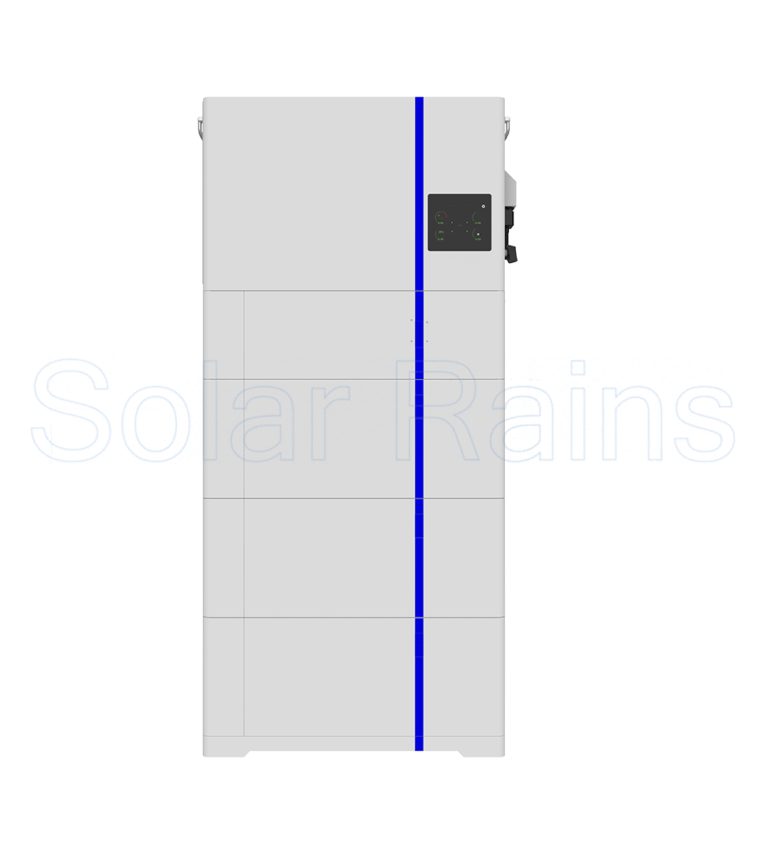
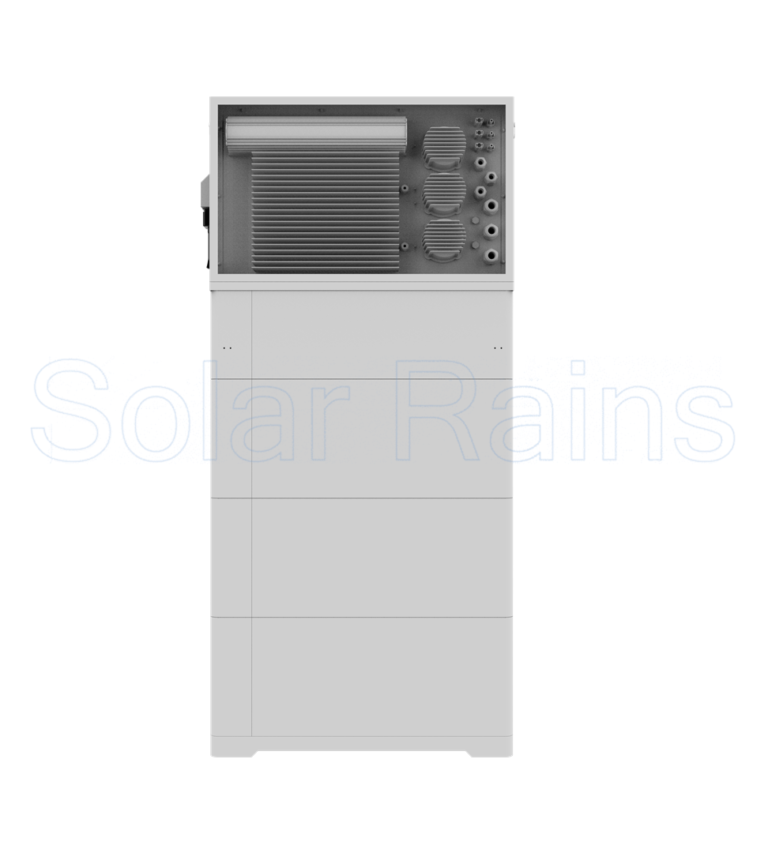
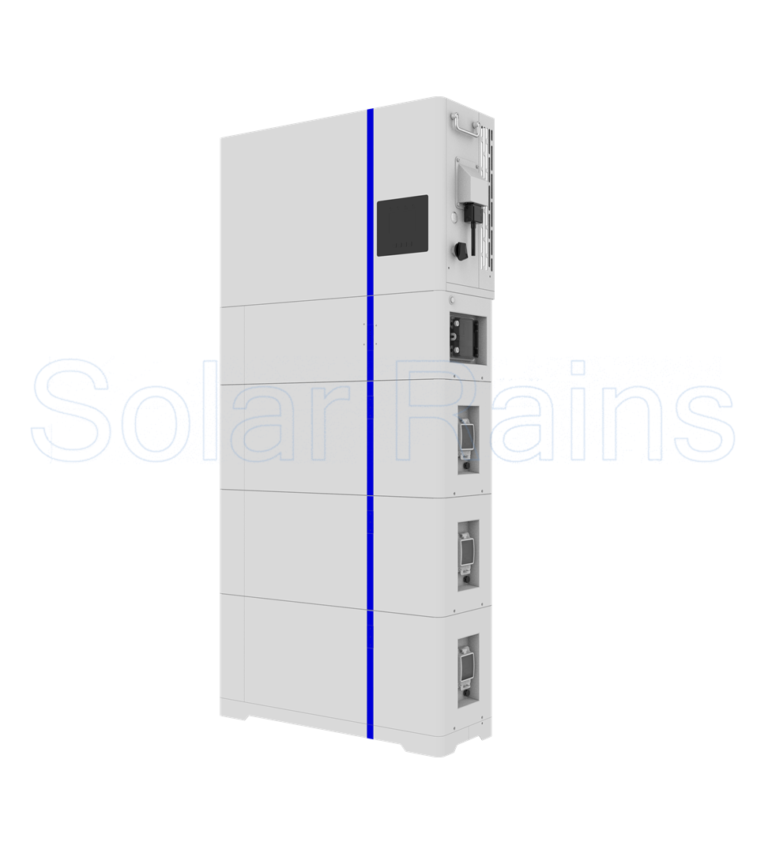
Deye Residential All-in-one Energy Storage System – Single Phase 5kW, 6kW, 8kW or 10kW Hybrid Inverter Only
Price range: $1,470.00 through $2,339.00
Add the product to your cart and request a quote at checkout
Description
The Deye all-in-one ESS is a low-voltage residential energy storage solution that combines a single-phase hybrid inverter with modular LiFePO4 battery storage in one integrated, stackable system. Solar Rains focuses on the 5kW, 6kW, 8kW and 10kW single-phase configurations, allowing the system to be matched to different household load profiles, PV array sizes and backup requirements.
The system uses 5.12kWh AI-W5.1-B battery modules and supports a scalable battery configuration of approximately 5kWh to 30kWh per stack. The brochure specifies a flat, stackable architecture with no additional inter-module wiring, while the completed system achieves an IP65 enclosure rating after stacking. Battery chemistry is LiFePO4, with a rated cycle life of at least 6,000 cycles under the stated test conditions.
For the models offered here, PV capability scales with inverter size. The 5kW, 6kW and 8kW configurations support maximum PV input power of 8kW, 9.6kW and 12.8kW respectively, while the current 10kW single-phase manual specifies 16kW maximum PV input power and up to 20kW maximum PV access power. The 10kW version also supports up to 210A battery charging and discharging current.
The result is a Deye low voltage ESS designed around residential self-consumption, battery backup and flexible energy management without requiring separate inverter and battery cabinets.
Key Features of DEYE Low Voltage Residential All-in-one BESS
- Integrated all-in-one architecture: Hybrid inverter and LFP battery storage form one coordinated residential system rather than separate standalone components.
- 5kW, 6kW, 8kW & 10kW single-phase options: Allows system output to be selected around different residential load and PV requirements.
- Modular 5.12kWh battery design: Battery storage can be configured from approximately 5kWh to 30kWh in a stacked installation.
- Fast backup switching: The brochure specifies a 4ms switching time, helping maintain energy security when operating with backup loads.
- Multiple operating functions: The manual includes on-grid, off-grid and UPS operation, programmable battery/grid priority, time-of-use control, smart load functions and support for generator power.
- Two MPPT trackers: Supports flexible PV string configuration, with the 8kW and 10kW single-phase models supporting two strings per MPPT according to the current manual.
- High conversion efficiency: Maximum inverter efficiency is specified at 97.6%, while the brochure lists maximum charging/discharging efficiency at 95.5%.
- Outdoor-capable enclosure: The assembled system is rated IP65, although Deye’s installation instructions still require careful site selection and avoidance of direct weather exposure.
- Smart control & monitoring: LCD-based system control is supported, with Wi-Fi monitoring identified in the manual and App, PC or touch-display control highlighted in the brochure.
- Long-term battery design: LiFePO4 modules are specified for ≥6,000 cycles at 90% DoD and 70% EOL under the stated test conditions, with a 10-year system warranty subject to Deye’s warranty conditions.
Main Benefits
For Homeowners
The main advantage of the Deye residential energy storage system is that solar generation, battery storage and backup functionality can be managed through one integrated platform. Excess PV energy can be stored for later use, while programmable operating modes allow the system to prioritise solar, battery or grid energy according to the configured strategy.
The 4ms switching capability is especially relevant for households that want backup support for critical loads. Instead of designing a separate battery enclosure and inverter arrangement, the modular stacked structure also creates a cleaner installation footprint.
For Solar System Designers & Electrical Engineers
The range gives designers multiple power classes while keeping the same core battery architecture. The 5kW through 10kW configurations support different PV input capacities, charging currents and load requirements without requiring an entirely different storage platform.
Two MPPT trackers, configurable operating modes, CAN communication with the battery management system and programmable charge priorities provide flexibility when designing a Deye battery storage installation around PV generation, household consumption and backup requirements.
For Installers & EPC Contractors
The stacked design is intended to simplify physical installation. Battery modules connect through blind-mating interfaces, reducing the need for external wiring between individual modules. The brochure specifically highlights quick installation without additional wiring or fixing screws between the core stacked components.
The common physical format also helps installers standardise projects across the 5kW, 6kW, 8kW and 10kW configurations.
For Distributors & Solar Retailers
A modular platform allows different inverter power ratings and battery capacities to be offered without maintaining completely separate storage architectures. The same 5.12kWh battery module can be used to build different capacity combinations, making the product easier to position for customers with different household energy requirements.
Installation of the Deye all-in-one ESS
Installation of the Deye all-in-one ESS must be carried out by qualified personnel. Deye specifically states that the device and battery should be installed by qualified professionals, with permanent grounding and local electrical regulations followed throughout the process.
Step 1: Inspect and prepare the installation area.
Before installation, check the inverter, PDU, battery modules and supplied components for damage. The installation location should be clean and flat, away from water and fire sources. Although the inverter is IP65, the manual instructs installers to avoid direct sunlight, rain and snow exposure, flammable or explosive areas, humidity above 95%, and installation above approximately 2,000m altitude.
Step 2: Position the battery base.
Place the supplied base near the wall, maintaining approximately 10–35mm between the base and wall. Deye’s installation illustration also specifies service clearances around the battery installation area to provide sufficient access. Each battery module weighs approximately 55kg, so the manual requires at least two people to handle a module using the supplied carrying handles.
Step 3: Stack the battery modules.
Place the first AI-W5.1-B module onto the base and align the module so that its blind-mating connector is on the same side as the corresponding base connection. Additional modules are then stacked vertically, connecting the upper module directly into the module below. This creates the compact, cable-reduced structure that defines the Deye low voltage ESS.
Step 4: Install and secure the PDU.
After the required battery modules have been stacked, attach the PDU wall-fixing plate and place the PDU on top of the stack. Connections between the base, battery modules and PDU are mechanically secured using the specified M4×6 screws. The PDU is then anchored to the wall using the supplied mounting hardware. Deye specifies two 10mm wall holes approximately 100–110mm deep with M6×100 expansion screws for the fixing plate.
Step 5: Complete electrical connections.
The qualified installer connects the battery, PV strings, grid input, load output, communications and mandatory earth connection according to the manual wiring diagrams. Before PV connection, polarity and open-circuit voltage must be checked, and AC/DC isolation procedures must be followed. The inverter provides battery BMS communication plus interfaces for meter communication, monitoring and other system functions.
Step 6: Commission and configure.
Once mechanical and electrical checks are complete, the installer can commission the system and configure operating priorities through the inverter’s LCD interface. The manual supports self-consumption, grid feed-in, on-grid/off-grid/UPS operation, time-of-use settings, smart load control and Wi-Fi monitoring.
Deye
Ningbo Deye Inverter Technology Co., Ltd. was founded in 2007 and develops integrated solar PV and energy storage solutions for residential, commercial and industrial applications. Deye’s portfolio includes PV inverters, hybrid inverters, microinverters and battery-based storage solutions, positioning the company as a provider of both solar power conversion and energy storage technology.
According to Deye’s Australian website, cumulative inverter shipments exceeded five million units by the end of 2025, including two million hybrid inverters. The company’s residential energy products reflect its broader focus on integrated PV, battery storage and intelligent energy management.
This page covers the single-phase 5kW, 6kW, 8kW and 10kW configurations only. The current Deye Australian manual identifies the corresponding AI-W5.1 single-phase family up to 10kW. The 10kW model should not be confused with Deye’s separate three-phase versions.
Each AI-W5.1-B battery module provides 5.12kWh. Deye describes the residential stacked configuration as approximately 5kWh to 30kWh, allowing the storage capacity to be selected around household requirements.
The main difference is inverter power and corresponding PV and battery-current capability. For example, the brochure lists maximum PV input power of 8kW, 9.6kW and 12.8kW for the 5kW, 6kW and 8kW single-phase models. The current 10kW manual specifies 16kW maximum PV input and 210A maximum charging/discharging current.
Yes. The product is designed for on-grid, off-grid and UPS operating modes. The brochure specifies a 4ms fast switching time, while the inverter manual also states that off-grid peak output can reach twice rated power for 10 seconds.
Yes. The official manual includes generator compatibility and allows AC, solar and generator charging priority to be configured through the system settings. This makes the Deye hybrid inverter architecture suitable for installations where an additional generator source forms part of the energy system.
The completed stack carries an IP65 rating, but installation location still matters. Deye instructs installers to avoid direct sunlight, rain and snow exposure, excessive humidity, flammable areas and unsuitable environmental conditions. Correct siting is therefore essential even though the enclosure is designed for indoor and outdoor applications.
| Dimensions and Weights | |
|---|---|
| SKU | AI-W5.1-5P1-AU-B |
| Weight | 34 kg |
| Dimensions | 72 x 25.5 x 33 cm |
| Dimensions and Weights | |
|---|---|
| SKU | AI-W5.1-6P1-AU-B |
| Weight | 34 kg |
| Dimensions | 72 x 25.5 x 33 cm |
| Dimensions and Weights | |
|---|---|
| SKU | AI-W5.1-8P1-AU-B |
| Weight | 34 kg |
| Dimensions | 72 x 25.5 x 33 cm |
| Dimensions and Weights | |
|---|---|
| SKU | AI-W5.1-10P1-AU-B |
| Weight | 34 kg |
| Dimensions | 72 x 25.5 x 33 cm |
| Download Area | |
|---|---|
Residential All-in-one Single Phase Hybrid Inverter datasheet | Download |
Residential All-in-one Single Phase Hybrid Inverter datasheet Manual | Download |
| System Specification | |
| Nominal Output Power / UPS Power (W) | 5000 / 5000 |
| AC Output Frequency and Voltage | 50 / 60Hz; L / N / PE 220 / 230Vac |
| Grid Type | Single Phase |
| Recommended Energy Configuration | 5kWh (Min.) |
| Max. Charging / Discharging Current (A) | 120 |
| Battery Operating Voltage (V) | 44.8 ~ 57.6 |
| Battery Chemistry | LiFePO₄ |
| IP Rating of Enclosure | IP65 (after stacking) |
| System Certification | IEC62619, IEC60730, CE, VDE2510-50, CEI 0-21 |
| Warranty [1] | 10 years |
| Inverter Technical Specification | |
| Max. PV Access Power (W) | 10000 |
| Max. PV Input Power (W) | 8000 |
| Max PV Input Voltage (V) | 500 |
| Rated PV Input Voltage (Vdc) | 370 |
| Start Up DC Voltage (Vdc) | 125 |
| MPPT Voltage Range (Vdc) | 150 ~ 425 |
| Max. PV Input Current (A) | 18+18 |
| Max. PV Short-circuit Current (A) | 27+27 |
| No. of MPP Trackers / No. of String Per MPP Tracker | 2 / 1+1 |
| Peak Power (off grid) | 2 time of rated power, 10s |
| Power Factor | 0.8 leading to 0.8 lagging |
| DC injection current (mA) | THD<3% (Linear load<1.5%) |
| Display | LCD |
| Relative Humidity | 0% ~ 100% (No Condensing) |
| Dimension (W × D × H, mm) | 720 × 255 × 330 |
| Weight (kg) | 34 |
| Communication with BMS | CAN2.0 |
| Safety | IEC / EN 62109-1, IEC / EN 62109-2, IEC / EN 61000-6-1, IEC / EN 61000-6-2, IEC / EN 61000-6-3, IEC / EN 61000-6-4 |
| Grid Regulation | VDE4105, IEC61727 / 62116, VDE0126, AS4777.2, CEI 0-21, EN50549-1, G98, G99, C10-11, UNE217002, NBR16149 / NBR16150 |
| Max. Efficiency | 97.60% |
| Max. charging / discharging efficiency | 95.50% |
| Battery Technical Specification | |
| Built-in Circuit Breaker | 125A 2P, 60Vdc |
| Nominal Voltage (V) | 51.2 |
| Battery Module Energy (kWh) | 5.12 |
| Module Scalability | Max. 36 pcs in parallel (Max. capacity of 184kWh) |
| Battery Module Dimension | 720 × 255 × 300 (W × D × H, mm) |
| Battery Base Dimension | 720 × 255 × 68 (W × D × H, mm) |
| Battery PDU3 Dimension | 720 × 255 × 228 (W × D × H, mm) |
| Battery Module Weight (kg) | 55 |
| Operating Temperature Range | Charge: -20℃-55℃ / Discharge: -20℃ ~ +55℃ |
| Cycle Life | ≥6000 (25℃±2℃, 0.5C / 0.5C, 90%DOD, 70%EOL) |
| Battery Module Certification | IEC62619, CE, UK, VDE2510-50, CEI 0-21, UN38.3, CE-LVD, CEC |
| System Specification | |
| Nominal Output Power / UPS Power (W) | 5000 / 5000 |
| AC Output Frequency and Voltage | 50 / 60Hz; L / N / PE 220 / 230Vac |
| Grid Type | Single Phase |
| Recommended Energy Configuration | 5kWh (Min.) |
| Max. Charging / Discharging Current (A) | 120 |
| Battery Operating Voltage (V) | 44.8 ~ 57.6 |
| System Specification | |
| Nominal Output Power / UPS Power (W) | 6000 / 6000 |
| AC Output Frequency and Voltage | 50 / 60Hz; L / N / PE 220 / 230Vac |
| Grid Type | Single Phase |
| Recommended Energy Configuration | 5kWh (Min.) |
| Max. Charging / Discharging Current (A) | 135 |
| Battery Operating Voltage (V) | 44.8 ~ 57.6 |
| Battery Chemistry | LiFePO₄ |
| IP Rating of Enclosure | IP65 (after stacking) |
| System Certification | IEC62619, IEC60730, CE, VDE2510-50, CEI 0-21 |
| Warranty [1] | 10 years |
| Inverter Technical Specification | |
| Max. PV Access Power (W) | 12000 |
| Max. PV Input Power (W) | 9600 |
| Max PV Input Voltage (V) | 500 |
| Rated PV Input Voltage (Vdc) | 370 |
| Start Up DC Voltage (Vdc) | 125 |
| MPPT Voltage Range (Vdc) | 150 ~ 425 |
| Max. PV Input Current (A) | 18+18 |
| Max. PV Short-circuit Current (A) | 27+27 |
| No. of MPP Trackers / No. of String Per MPP Tracker | 2 / 1+1 |
| Peak Power (off grid) | 2 time of rated power, 10s |
| Power Factor | 0.8 leading to 0.8 lagging |
| DC injection current (mA) | THD<3% (Linear load<1.5%) |
| Display | LCD |
| Relative Humidity | 0% ~ 100% (No Condensing) |
| Dimension (W × D × H, mm) | 720 × 255 × 330 |
| Weight (kg) | 34 |
| Communication with BMS | CAN2.0 |
| Safety | IEC / EN 62109-1, IEC / EN 62109-2, IEC / EN 61000-6-1, IEC / EN 61000-6-2, IEC / EN 61000-6-3, IEC / EN 61000-6-4 |
| Grid Regulation | VDE4105, IEC61727 / 62116, VDE0126, AS4777.2, CEI 0-21, EN50549-1, G98, G99, C10-11, UNE217002, NBR16149 / NBR16150 |
| Max. Efficiency | 97.60% |
| Max. charging / discharging efficiency | 95.50% |
| Battery Technical Specification | |
| Built-in Circuit Breaker | 125A 2P, 60Vdc |
| Nominal Voltage (V) | 51.2 |
| Battery Module Energy (kWh) | 5.12 |
| Module Scalability | Max. 36 pcs in parallel (Max. capacity of 184kWh) |
| Battery Module Dimension | 720 × 255 × 300 (W × D × H, mm) |
| Battery Base Dimension | 720 × 255 × 68 (W × D × H, mm) |
| Battery PDU3 Dimension | 720 × 255 × 228 (W × D × H, mm) |
| Battery Module Weight (kg) | 55 |
| Operating Temperature Range | Charge: -20℃-55℃ / Discharge: -20℃ ~ +55℃ |
| Cycle Life | ≥6000 (25℃±2℃, 0.5C / 0.5C, 90%DOD, 70%EOL) |
| Battery Module Certification | IEC62619, CE, UK, VDE2510-50, CEI 0-21, UN38.3, CE-LVD, CEC |
| System Specification | |
| Nominal Output Power / UPS Power (W) | 6000 / 6000 |
| AC Output Frequency and Voltage | 50 / 60Hz; L / N / PE 220 / 230Vac |
| Grid Type | Single Phase |
| Recommended Energy Configuration | 5kWh (Min.) |
| Max. Charging / Discharging Current (A) | 135 |
| Battery Operating Voltage (V) | 44.8 ~ 57.6 |
| Battery Chemistry | LiFePO₄ |
| System Specification | |
| Nominal Output Power / UPS Power (W) | 8000 / 8000 |
| AC Output Frequency and Voltage | 50 / 60Hz; L / N / PE 220 / 230Vac |
| Grid Type | Single Phase |
| Recommended Energy Configuration | 10kWh (Min.) |
| Max. Charging / Discharging Current (A) | 190 |
| Battery Operating Voltage (V) | 44.8 ~ 57.6 |
| Battery Chemistry | LiFePO₄ |
| IP Rating of Enclosure | IP65 (after stacking) |
| System Certification | IEC62619, IEC60730, CE, VDE2510-50, CEI 0-21 |
| Warranty [1] | 10 years |
| Inverter Technical Specification | |
| Max. PV Access Power (W) | 16000 |
| Max. PV Input Power (W) | 12800 |
| Max PV Input Voltage (V) | 500 |
| Rated PV Input Voltage (Vdc) | 370 |
| Start Up DC Voltage (Vdc) | 125 |
| MPPT Voltage Range (Vdc) | 150 ~ 425 |
| Max. PV Input Current (A) | 32+32 |
| Max. PV Short-circuit Current (A) | 48+48 |
| No. of MPP Trackers / No. of String Per MPP Tracker | 2 / 2+2 |
| Peak Power (off grid) | 2 time of rated power, 10s |
| Power Factor | 0.8 leading to 0.8 lagging |
| DC injection current (mA) | THD<3% (Linear load<1.5%) |
| Display | LCD |
| Relative Humidity | 0% ~ 100% (No Condensing) |
| Dimension (W × D × H, mm) | 720 × 255 × 330 |
| Weight (kg) | 34 |
| Communication with BMS | CAN2.0 |
| Safety | IEC / EN 62109-1, IEC / EN 62109-2, IEC / EN 61000-6-1, IEC / EN 61000-6-2, IEC / EN 61000-6-3, IEC / EN 61000-6-4 |
| Grid Regulation | VDE4105, IEC61727 / 62116, VDE0126, AS4777.2, CEI 0-21, EN50549-1, G98, G99, C10-11, UNE217002, NBR16149 / NBR16150 |
| Max. Efficiency | 97.60% |
| Max. charging / discharging efficiency | 95.50% |
| Battery Technical Specification | |
| Built-in Circuit Breaker | 125A 2P, 60Vdc |
| Nominal Voltage (V) | 51.2 |
| Battery Module Energy (kWh) | 5.12 |
| Module Scalability | Max. 36 pcs in parallel (Max. capacity of 184kWh) |
| Battery Module Dimension | 720 × 255 × 300 (W × D × H, mm) |
| Battery Base Dimension | 720 × 255 × 68 (W × D × H, mm) |
| Battery PDU3 Dimension | 720 × 255 × 228 (W × D × H, mm) |
| Battery Module Weight (kg) | 55 |
| Operating Temperature Range | Charge: -20℃-55℃ / Discharge: -20℃ ~ +55℃ |
| Cycle Life | ≥6000 (25℃±2℃, 0.5C / 0.5C, 90%DOD, 70%EOL) |
| Battery Module Certification | IEC62619, CE, UK, VDE2510-50, CEI 0-21, UN38.3, CE-LVD, CEC |
| System Specification | |
| Nominal Output Power / UPS Power (W) | 8000 / 8000 |
| AC Output Frequency and Voltage | 50 / 60Hz; L / N / PE 220 / 230Vac |
| Grid Type | Single Phase |
| Recommended Energy Configuration | 10kWh (Min.) |
| Max. Charging / Discharging Current (A) | 190 |
| Battery Operating Voltage (V) | 44.8 ~ 57.6 |
| Battery Chemistry | LiFePO₄ |
| IP Rating of Enclosure | IP65 (after stacking) |
| System Certification | IEC62619, IEC60730, CE, VDE2510-50, CEI 0-21 |


Reviews
There are no reviews yet.